When we think about growing food, we tend to focus on what we can see: the seeds, the crops, and eventually the harvest. But some of the most important work happens beneath our feet.
Soil is home to bacteria, fungi, earthworms, and countless other organisms that help break down organic matter and cycle nutrients. They contribute to the conditions plants need to grow. Yet soil is often treated as little more than a medium for growing crops, with less attention given to the life that makes it productive.
Understanding soil health means looking beyond the next harvest and asking a bigger question: how do we keep the land healthy enough to grow food season after season?
What Makes Soil Healthy?
Healthy soil is not simply soil that produces a good crop. It needs the right balance of physical structure, nutrients, water, air, and biological activity.
A healthy soil structure allows roots to grow and water to move through the ground. Organic matter helps improve soil structure and provides food for many soil organisms. Nutrients need to be available in suitable amounts, while the soil’s pH and moisture conditions influence how well plants and microorganisms function.
These elements work together. Adding nutrients may help a crop grow, but long-term soil health also depends on maintaining organic matter, limiting erosion, and supporting the organisms that help keep nutrients moving through the soil.
The Tiny Organisms That Keep Soil Working
Soil is a living ecosystem, even when it looks like nothing more than dirt.
Bacteria help decompose organic material and transform nutrients. Some form beneficial relationships with plant roots. In legumes such as moong, certain bacteria living in root nodules help convert atmospheric nitrogen into forms the plant can use.
Fungi help break down tougher plant materials, and some form partnerships with roots that can improve access to water and nutrients. Earthworms and other soil organisms break down organic matter and contribute to soil structure.
Together, these organisms help nutrients cycle through the soil and support plant growth.
This is one reason soil health matters beyond a single harvest. When soil organisms have suitable conditions to thrive, they help maintain the natural processes on which farming depends.
How Can Pesticides Affect Soil Health?
Pesticides help farmers manage insects, weeds, and diseases that can damage crops. But their effects can sometimes extend beyond the organisms they are intended to control.
Depending on the pesticide, its dose, frequency of application, and soil conditions, some products can affect non-target soil organisms or alter microbial activity. This matters because these organisms play roles in decomposition and nutrient cycling.
However, pesticides do not all behave the same way, and it would be inaccurate to say that every pesticide kills soil microorganisms. Soil health is influenced by many factors, including how land is tilled, whether the soil is left bare, how much organic matter is returned, and how nutrients are managed.
The goal is to manage pests while minimising unnecessary harm to the wider ecosystem. Monitoring crops, identifying pests correctly, and using integrated pest management can help farmers decide when intervention is needed and which methods are appropriate.
On our family farms in Bundelkhand, we do not use chemical pesticides. One traditional practice we follow is spreading ash from our chulha across the fields as part of our approach to pest management. The ash is made mostly from cow dung, with a little wood to keep the fire going.
Ash is not a universal pest-control solution, and its effects depend on the pest and how it is used. It can also alter soil pH, so its suitability and application need to be considered in the context of the soil. Understanding these limitations is just as important as preserving traditional farming practices.
What Does Regenerative Agriculture Look Like on Indian Farms?
There is no single model that works for every Indian farmer. The approach must fit the crops, climate, available resources, and economic realities of each farm.
A farmer in a rain-fed region may need to prioritise water conservation. Another may have opportunities to diversify crops or integrate livestock. A smallholder may need to weigh the labour and cost of changing existing practices against the benefits they hope to achieve.
On our family farms in Bundelkhand, Madhya Pradesh, the way we manage what remains after harvest is one example of how these decisions play out in everyday farming.
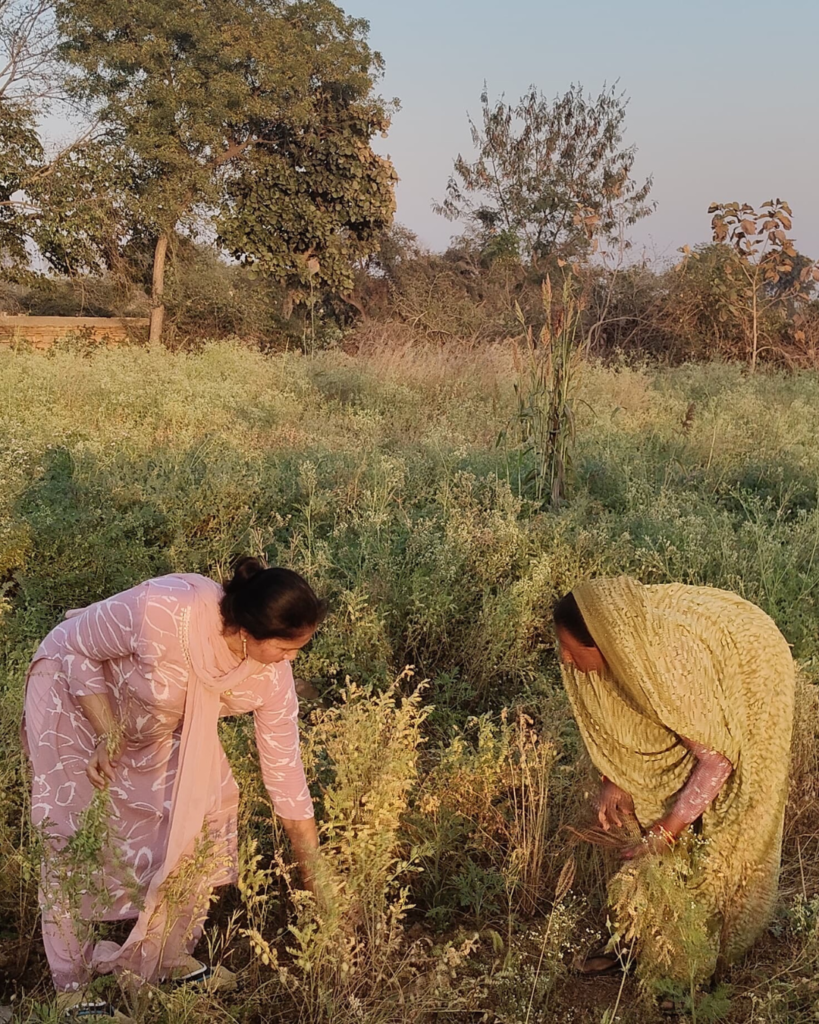
We leave some wheat residue in the field. Because the straw is bulky, we collect some of it, dry it, and either return it to the soil or use it as cattle feed. With pulses such as moong, we leave the straw in the field. The lower parts of harvested plants also remain in the ground and get mixed into the soil when we plough again.
These are practical decisions shaped by how our family manages its crops and available resources. They illustrate some principles associated with regenerative farming, but they do not, on their own, establish that a farm is fully regenerative. Demonstrating improvements in soil health or other environmental outcomes requires appropriate observation and measurement over time.
That distinction is important to us. Farming practices should be understood for what they are, rather than described with a label that promises more than we can demonstrate
What Happens to Crop Residues After Harvest?
Harvesting a crop does not mean everything left in the field has become waste.
Straw, stalks, leaves, and other plant remains can return organic matter to the soil as they decompose. They can also help protect the soil surface from erosion and moisture loss when managed appropriately.
Burning residues, on the other hand, releases smoke and air pollutants and removes organic material that could otherwise be put to use.
There are several ways to manage crop residues. Farmers may leave suitable material on the field, use it as mulch, compost it, or use some of it as livestock feed. The best option depends on the crop, local conditions, and the next planting cycle.
On our family farms, we try not to remove all the wheat residue after harvest. Some straw remains in the field. The rest is collected because of its volume, dried, and either returned to the soil or used as cattle feed. The lower parts of the harvested plants are left in the ground and mixed into the soil when we plough again.
With pulses such as moong, we leave the straw in the field. Pulse residues can contribute organic matter, while legumes can also contribute to soil nitrogen through their association with nitrogen-fixing bacteria. The amount of nitrogen that remains available to subsequent crops depends on growing conditions and how the residues are managed.
These practices reflect a simple idea: what remains after a harvest can still have a role in the next growing cycle.
4 Practices That Can Help Maintain Soil Health
There is no single method that works for every farm. Soil type, rainfall, water availability, crops, and local conditions all influence which practices are suitable. But a few principles can guide better soil management.
1. Return Organic Matter to the Soil
Compost, suitable crop residues, and properly managed animal manure can add organic matter to the soil. As this material decomposes, it provides food for soil organisms and contributes to soil structure and nutrient cycling.
Animal manure should be handled and applied appropriately, taking its nutrient content and the needs of the soil into account. More is not always better; excessive applications can create nutrient imbalances or environmental problems.
2. Rotate Crops
Growing the same crop repeatedly can encourage certain pests and diseases and place repeated demands on the soil.
Rotating crops, particularly cereals with legumes such as moong, can diversify the farming system. Legumes may contribute nitrogen through biological nitrogen fixation, while different crops can vary in their rooting patterns and nutrient needs.
A useful rotation should be planned around the local climate, soil, water supply, and the needs of the following crop.
3. Keep the Soil Covered
Bare soil is more exposed to wind, heavy rain, and direct sunlight. Depending on local conditions, this can increase erosion and moisture loss.
Leaving suitable residues on the field, using mulch, or growing cover crops can help protect the soil surface. These practices can also contribute organic matter over time.
The right approach depends on the crop and farming system, but keeping soil protected where practical is an important consideration.
4. Use Fertilisers and Pesticides Thoughtfully
Soil health does not mean that every farm must avoid all agricultural inputs. It means understanding what the soil and crop need, applying inputs appropriately, and avoiding unnecessary use.
Soil testing can help farmers understand nutrient levels and pH. Monitoring crops can help identify pest problems before deciding how to manage them. Combining suitable cultural, biological, and chemical methods can reduce reliance on repeated, unnecessary treatments.
Good soil management is about making informed decisions, not simply replacing one input with another.
Healthy Soil Takes Time
Soil health isn’t something that can be improved in a single season. It takes time, observation and choices that consider what the land will need for future crops.
At Amratahaar, this is part of our connection to farming in Bundelkhand, where our family grows the wheat that eventually becomes our atta. From managing crop residues after harvest to preparing the fields for the next growing season, caring for the soil is part of the work that happens long before the grain reaches the mill.
These choices are also part of a wider conversation about regenerative farming — an approach that looks beyond a single harvest to consider the long-term health of the land. Read our guide to regenerative farming in India to understand what it means, why it matters, and the challenges farmers face in adopting it.