A farm is often judged by its harvest. How much grain did it produce? Was the crop healthy? Did the farmer earn enough to grow again next season?
But there is another question worth asking: what condition is the farm left in after the harvest?
This question is at the heart of regenerative farming, an approach that looks beyond a single growing season and considers how farming affects the land and resources future crops will depend on.
The term is gaining attention around the world, including in India. But regenerative farming is not a single technique, and there is no universally accepted definition that every farm follows. Understanding what it means requires looking beyond the label.
What Is Regenerative Farming?
Regenerative agriculture is an approach to agriculture that aims to improve or maintain the health and functioning of the farming ecosystem over time.
Rather than focusing only on the quantity of food produced, it considers the wider effects of farming on soil, water, biodiversity, and the long-term productivity of the land.
The approach draws on practices such as crop diversification, integrating livestock where appropriate, maintaining soil cover, and managing agricultural inputs thoughtfully. Which practices are suitable depends on the farm, its environment, and the crops being grown.
There is no fixed checklist that automatically makes a farm regenerative. A practice that benefits one farming system may be impractical or unsuitable in another. What matters is the purpose behind the practice, how it is implemented, and whether it delivers meaningful improvements over time.
Why Is Regenerative Farming Gaining Attention in India?
Indian agriculture spans an enormous range of conditions. Farmers grow crops in rain-fed regions, irrigated plains, dry landscapes, and areas with very different soil types and growing seasons. Their challenges vary accordingly.
Across these settings, farmers must balance immediate production with the resources needed for future harvests. Erosion, declining soil organic matter, water stress, and changing weather patterns can create challenges for agricultural productivity. The cost of fertilizers, pesticides, fuel, and other inputs also affects farm profitability.
Regenerative agriculture encourages farmers to consider these challenges together rather than treating each growing season as an isolated event.
For example, diversifying crops may help spread some production risks, while better management of water and agricultural inputs may improve resource efficiency. However, no approach guarantees higher yields, lower costs, or protection against extreme weather. Outcomes depend on local conditions and how practices are adopted.
The growing interest in regenerative farming reflects a broader question: how can farms continue producing food while looking after the resources on which that production depends?
Is Regenerative Farming the Same as Organic Farming?
The two approaches can overlap, but they are not the same.
Organic farming follows defined standards for permitted inputs and farming practices. Depending on the applicable certification system, farms must meet specific requirements to sell products as certified organic.
Regenerative farming focuses on improving or maintaining the condition of the farming ecosystem. The term does not have one universally accepted standard or certification framework.
This distinction matters. A farm may use regenerative practices without being certified organic, while an organic farm may use practices that support several regenerative goals.
Neither label alone tells the whole story. To understand how a farm operates, it is more useful to ask which practices it follows, why it follows them, and how their effects are assessed.
Regenerative farming should not automatically be understood as pesticide-free, chemical-free, or organic. Those claims require separate evidence.
What Does Regenerative Agriculture Look Like on Indian Farms?
There is no single model that works for every Indian farmer. The approach must fit the crops, climate, available resources, and economic realities of each farm.
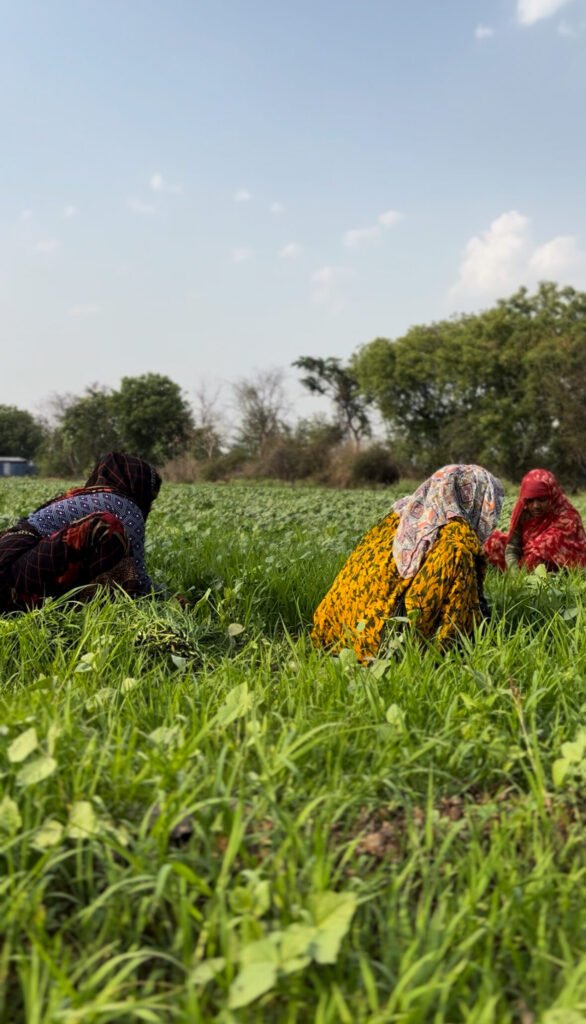
A farmer in a rain-fed region may need to prioritise water conservation. Another may have opportunities to diversify crops or integrate livestock. A smallholder may need to weigh the labour and cost of changing existing practices against the benefits they hope to achieve.
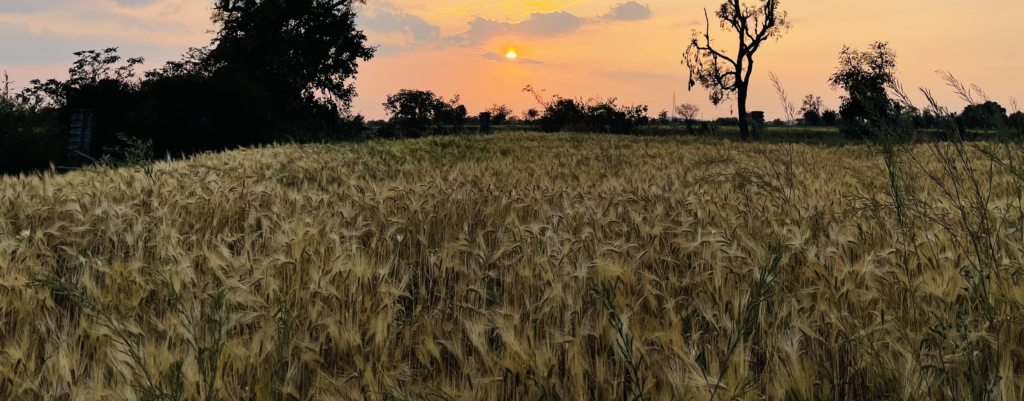
On our family farms in Bundelkhand, Madhya Pradesh, the way we manage what remains after harvest is one example of how these decisions play out in everyday farming.
We leave some wheat residue in the field. Because the straw is bulky, we collect some of it, dry it, and either return it to the soil or use it as cattle feed. With pulses such as moong, we leave the straw in the field. The lower parts of harvested plants also remain in the ground and get mixed into the soil when we plough again.
These are practical decisions shaped by how our family manages its crops and available resources. They illustrate some principles associated with regenerative farming, but they do not, on their own, establish that a farm is fully regenerative. Demonstrating improvements in soil health or other environmental outcomes requires appropriate observation and measurement over time.
That distinction is important to us. Farming practices should be understood for what they are, rather than described with a label that promises more than we can demonstrate
What Are the Challenges of Adopting Regenerative Farming?
If you enjoy oats, there’s no reason to stop eating them.
Changing farming practices is not always straightforward.
Some approaches require new equipment, additional labour, different crop schedules, or a period of adjustment before their benefits become clear. Crop choices may also be constrained by water availability, local markets, and the need for a reliable income.
Farmers cannot always adopt a practice simply because it works elsewhere. They need to understand whether it suits their land and whether they can manage the transition.
There is also the question of measuring progress. A farm should not be judged regenerative simply because it uses compost, grows more than one crop, or leaves residues in a field. The wider system and its outcomes matter.
Soil tests, farm records, observations across multiple seasons, and advice from agricultural experts can help farmers assess whether their decisions are making a difference.
Regenerative farming is best approached as a process of learning and adapting, not as a quick fix or a guarantee of better results.
Looking Beyond a Single Harvest
At Amratahaar, our connection to farming begins with our family farms in Bundelkhand, where our journey from grain to kitchen begins.
For us, the journey from farm to kitchen involves more than the grain eventually harvested and milled. It also involves the decisions made throughout the growing season and how the land is managed for what comes next.
Regenerative farming offers one way to think about those decisions. It encourages a longer view of agriculture, one that considers not only what a farm produces today but also the resources it will need tomorrow.
There is no universal formula. The most meaningful approach is one that fits the land, works for the farmer, and is evaluated honestly over time.