Oats got the packaging, the ads, and a whole supermarket aisle. Daliya just stayed in the kitchen.
But if you’re trying to choose a healthy breakfast, you may still be wondering: daliya vs oats — which one is better?
Oats are often marketed as the obvious healthy choice, especially for weight management and fitness. Dalia, meanwhile, is something many Indian households have been eating for years.
The truth is a little more interesting.
Both can be nutritious breakfast options, but they have different strengths. Oats are particularly known for their beta-glucan fibre, while whole-wheat daliya is a versatile grain that provides dietary fibre and fits naturally into Indian meals.
And if you’re choosing something to eat regularly, nutrition isn’t the only thing that matters. How you cook it, what you add to it, how filling you find it and whether it actually fits into your everyday diet matter too.
So let’s compare dalia and oats properly.
Dalia or Oats: What’s the Difference?
Oats and daliya are both whole-grain options, but they aren’t interchangeable.
Oats are naturally rich in beta-glucan, a type of soluble fibre that has been widely studied for its role in cholesterol and blood glucose management. Daliya, on the other hand, is made from broken wheat and provides dietary fibre while offering a more familiar, versatile option for Indian meals.
And when it comes to weight management, neither one has a clear advantage on its own. The portion you eat, how you prepare it and what you add to the meal all make a difference.
So rather than asking which one is “healthier,” it makes more sense to look at what each grain offers — and which one fits your everyday diet better.
What Is Daliya?
Dalia, or daliya, is essentially broken wheat.
Whole wheat kernels are cleaned and broken into smaller pieces, which makes them quicker to cook than whole wheat while retaining much of the grain.
Dalia can be made from different wheat varieties, so its nutritional profile isn’t identical across every product you see in the market.
It is also remarkably versatile. You can make savoury vegetable daliya, sweet daliya, khichdi-style preparations or use it alongside dal, curd and vegetables for a more balanced meal.
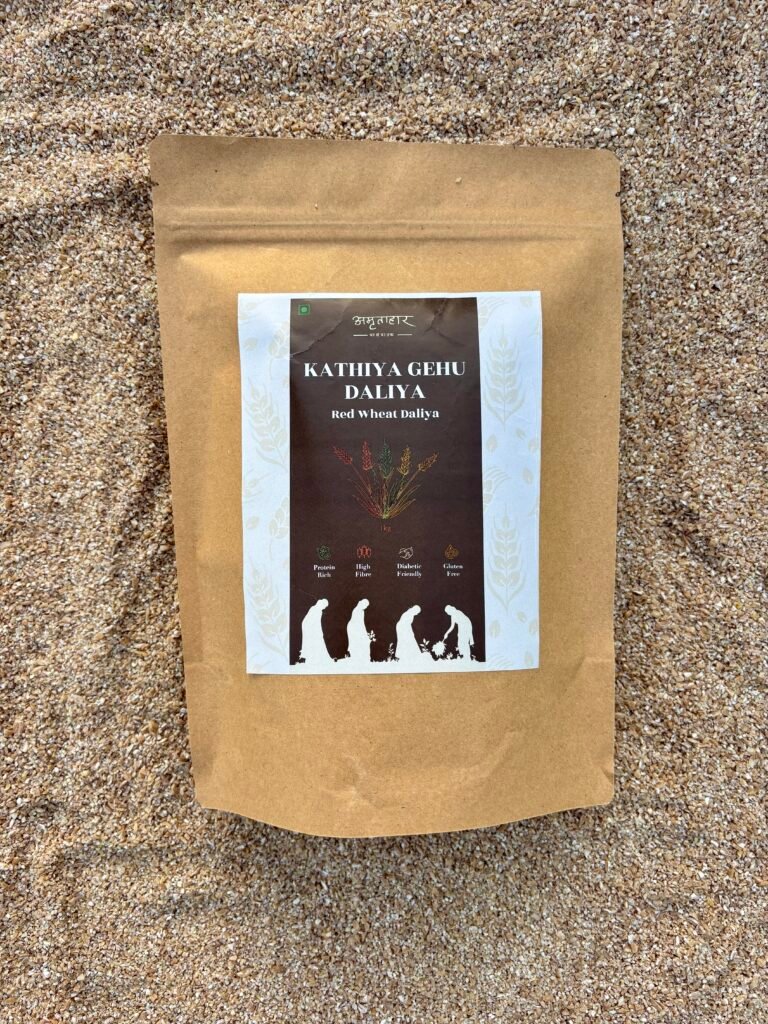
For example, our Red Wheat Daliya is made from Kathiya Gehu, a red wheat variety grown in Bundelkhand.
What Are Oats?
Oats are cereal grains that are commonly eaten as oatmeal or porridge.
You’ll usually find them as:
- Steel-cut oats — oat groats cut into smaller pieces
- Rolled oats — steamed and flattened
- Instant oats — more finely processed and quicker to cook
One of the things that makes oats nutritionally distinctive is beta-glucan, a type of soluble fibre naturally found in oats.
Oats are also relatively easy to customise. You can make them sweet with fruit and nuts or savoury with vegetables and spices.
Daliya vs Oats: Nutrition Comparison
The exact nutrition of daliya and oats depends on the specific product, grain variety and processing method, so there isn’t one universal nutrition profile for every packet of daliya or oats.
Still, there are a few useful differences to know.
Fiber
Both can contribute dietary fiber to your diet.
Oats have a particular advantage in that they contain beta-glucan, a type of soluble fiber that is especially associated with oats.
Dalia provides dietary fiber from wheat. For example, our Red Wheat Daliya contains 8.5g of dietary fiber per 100g.
Protein
Oats generally contain more protein per 100g than many wheat-based foods.
But that doesn’t mean a daliya breakfast has to be low in protein. You can easily build a more protein-rich meal by pairing daliya with foods such as dal, curd, peas, legumes, nuts or seeds.
And that’s an important point when comparing the two: you’re eating a meal, not a grain in isolation.
Beta-glucan
This is one area where oats stand out.
Beta-glucan is a soluble fibre naturally present in oats. If you’re specifically looking to include beta-glucan in your diet, oats are the more obvious choice.
Dalia, meanwhile, has a different advantage: it gives you a versatile wheat-based grain that works well across familiar Indian meals.
Why Daliya Works So Well in Indian Meals
This is where daliya has a very practical advantage.
You don’t have to completely change the way you eat to include it.
You can make:
Vegetable daliya
Cook it with seasonal vegetables, spices and a little oil for a simple savoury meal.
Daliya with dal
Combine broken wheat with dal for a more substantial meal with an additional source of protein.
Daliya with curd
Serve savoury daliya with curd for an easy everyday combination.
Sweet daliya
You can also make daliya sweet, although the amount of sugar or other sweeteners you add will affect the overall nutrition of the meal.
And that’s really what makes daliya useful. It doesn’t have to be treated as a special health food.
It can simply be food you eat regularly.
So, Daliya or Oats?
If you enjoy oats, there’s no reason to stop eating them.
They offer beta-glucan, they’re easy to prepare and they can absolutely be part of a balanced breakfast.
But if you want a grain that fits naturally into Indian-style, savoury meals, daliya makes a very strong choice.
You can pair it with vegetables, dal, curd and legumes, change the preparation depending on what you have at home, and make it part of the same kind of everyday cooking you’re already familiar with.
So the better question isn’t really:
“Which is healthier — daliya or oats?”
It’s:
“Which one can I turn into a balanced meal that I actually enjoy eating regularly?”
For many Indian kitchens, daliya may be the easier answer.
Why Our Red Wheat Daliya Is Made From Kathiya Gehu
At Amratahaar, our Red Wheat Daliya is made from Kathiya Gehu, a red wheat variety grown in Bundelkhand.
The wheat is cleaned, sorted and processed before being packed, keeping the process simple and the grain close to what it started as.
And you don’t have to use it in just one way.
Make a savoury breakfast, cook it with dal and vegetables, or try it in a preparation you’ve never made with daliya before.
No extra steps. No shortcuts.
FAQs
Is daliya healthier than oats?
Both can be part of a healthy diet. Oats are a good source of beta-glucan, while daliya provides dietary fibre and works well in everyday Indian meals.
Is daliya good for weight loss?
Yes, daliya can be part of a weight-loss diet. Your portion size and overall diet matter more than choosing daliya alone.
Is daliya the same as broken wheat?
Yes. Daliya is commonly made from broken or cracked wheat.
Can I eat daliya every day?
Yes. Daliya can be eaten regularly as part of a varied, balanced diet.
Which is better for breakfast: oats or daliya?
Both can be good choices. Oats provide beta-glucan, while daliya is versatile and works especially well in savoury Indian meals.