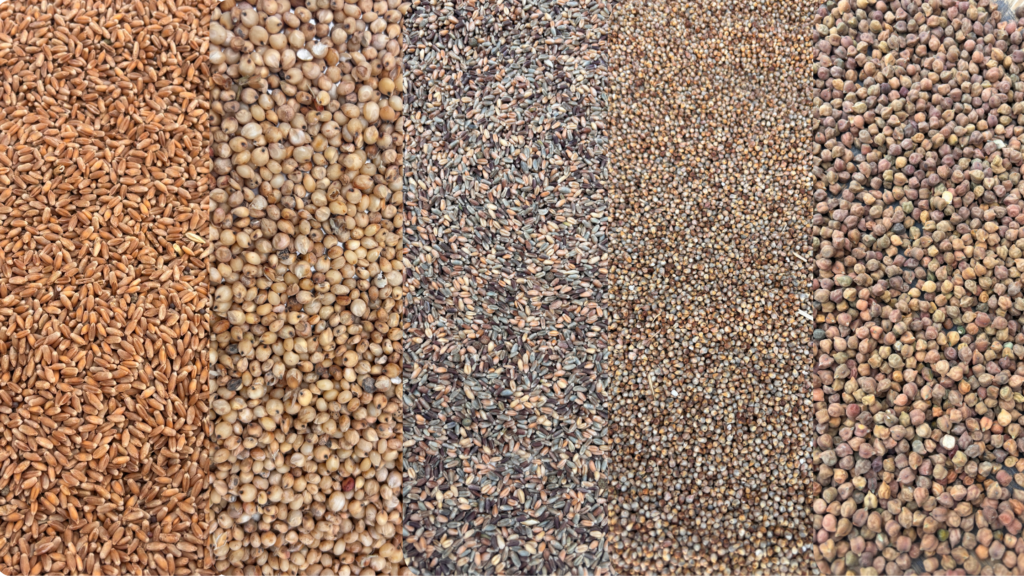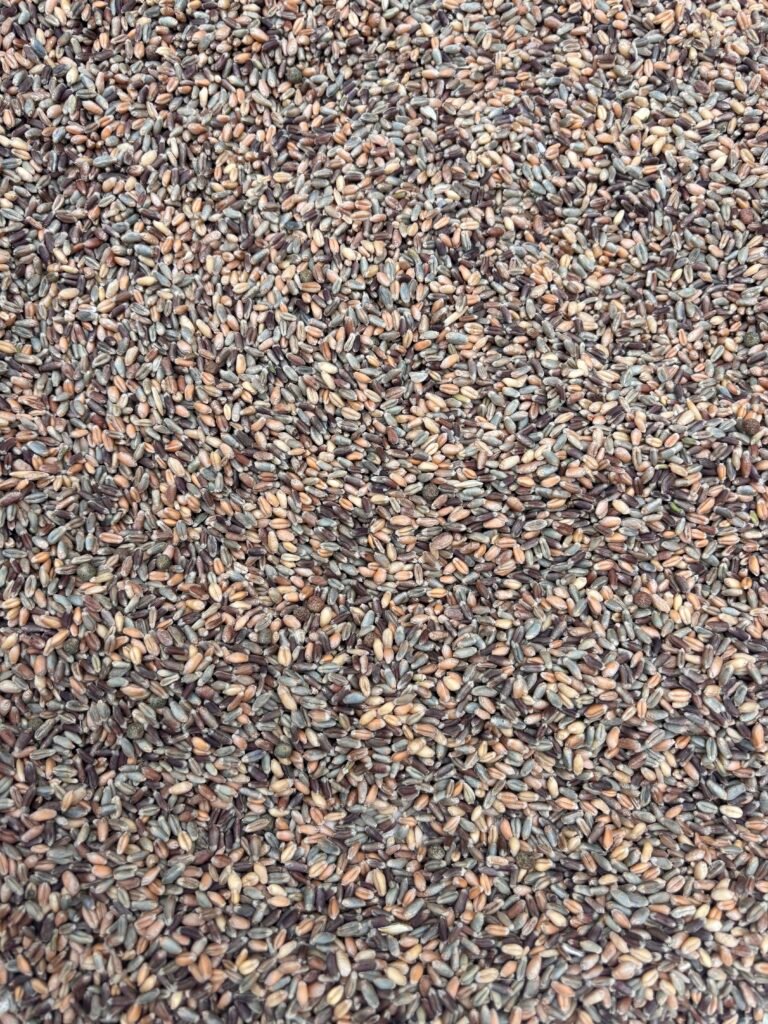
The population is increasing at an alarming rate day by day and to mitigate the hunger need of population, farmers are applying large amount of chemicals, pesticides in soil that leads to decrease in yield of crops, pollution to soil and environments with destruction of soil health. So, Now a different type of colored wheat has gained more importance and can fight against various diseases as well as against malnutrition.
Among the many wheat varieties grown in India, one has quietly stood out for its unusual colour and its return to traditional, less-processed farming: black wheat. Naturally pigmented and grown in far smaller quantities than common wheat, it’s gaining attention not because it’s trendy, but because of what it retains — fibre, antioxidants, and a grain structure closer to how wheat has always grown.
What is Black Wheat?
Black wheat is a variety of pigmented wheat Developed by NABI (National Agri-Food Biotechnology Institute) by crossing blue and purple wheat, it is approved by FSSAI for consumption. The black colour persistence is due to the pigment anthocyanin content present in the outer layer of wheat grain.
Compared to conventional wheat, black wheat is associated with higher levels of dietary fibre, antioxidants, and certain minerals — largely due to the anthocyanin-rich outer layer that gives it its colour. Research from institutions like NABI continues to study its potential nutritional value, though it should be seen as a wholesome addition to the diet rather than a solution to any specific health condition.
Grown only in limited regions and in smaller quantities, black wheat is still not widely cultivated, making it a relatively rare grain compared to conventional wheat. Read more here.
Nutritional Benefits of Black Wheat
Black wheat is valued not because it is trendy, but because it retains much of its natural goodness:
- Naturally high in dietary fibre, which supports fullness and slower digestion
- Contains plant-based antioxidants from its natural pigmentation
- Provides complex carbohydrates that release energy gradually
- Retains the bran layer when stone-ground, preserving natural nutrients
Because it is less processed than refined flour, black wheat flour fits well into everyday meals for those seeking more mindful food choices. India Science, Technology and Innovation Portal.
Why Black Wheat is Rare
Black wheat is grown today only by a small number of farmers who value traditional cultivation methods. Its limited availability, careful growing conditions, and lower commercial production make it rare.
Black wheat typically yields less than common wheat — around 45 quintals per hectare compared to 58-60 for conventional wheat — which is part of why it remains a smaller, more deliberate crop. Cultivation has slowly grown across states including Punjab, Haryana, Uttar Pradesh, Maharashtra, and Madhya Pradesh, with Madhya Pradesh among the leading producers of both common and black wheat. As of the most recent widely cited data (2018-19), total area under black wheat cultivation stood at roughly 700 acres nationally — still a small fraction of India’s overall wheat farming.
Curious about black wheat’s specific nutritional science — including its gluten profile and digestive benefits? We’ve covered that in more depth in Black Wheat Explained.
Amratahaar’s Black Wheat Flour
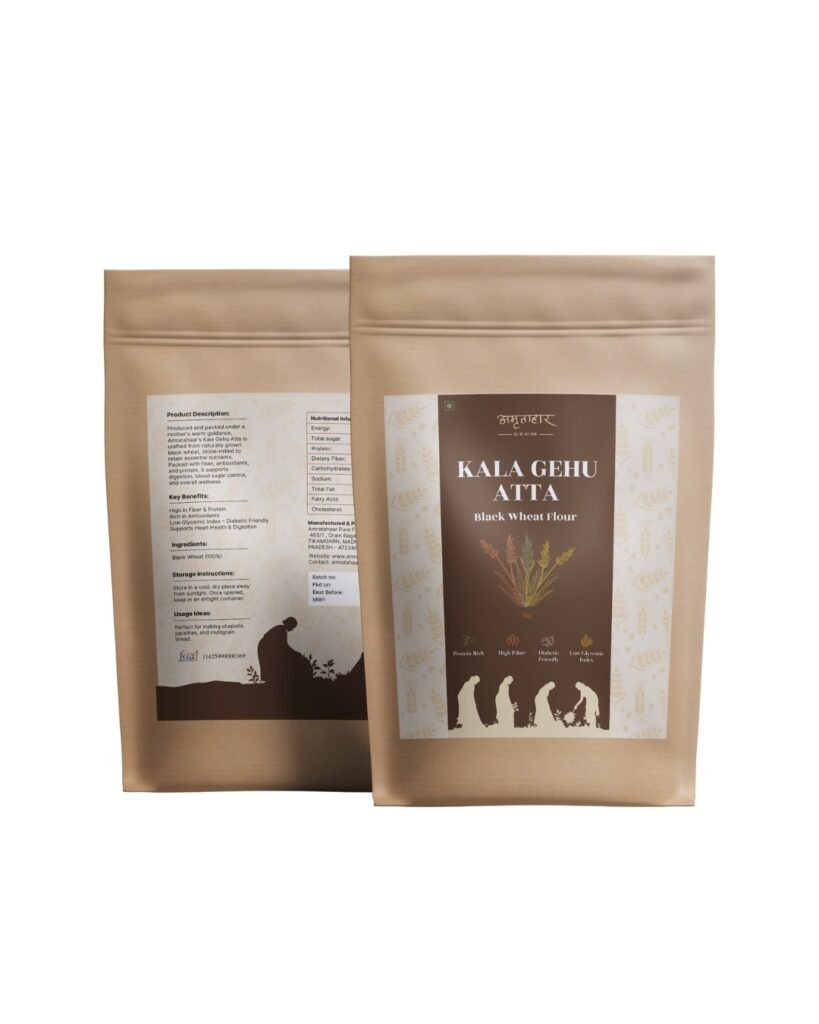
At Amratahaar, our black wheat flour is made from whole black wheat grains, stone-ground in small batches. We do not bleach, polish, or refine the grain. What reaches your kitchen is the grain in its most honest form—chosen with the same care a mother would choose food for her family.
Black wheat flour can be used for rotis, parathas, and everyday cooking, offering a deeper flavour and satisfying texture.
FAQs
Is black wheat and Khapli wheat the same?
No. Black wheat and Khapli wheat are different varieties of wheat with different characteristics.
Is black wheat better than normal wheat?
It can be a good alternative. Black wheat is a whole grain that provides fibre and naturally occurring antioxidants. But whether it is “better” depends on your dietary needs and how the flour is processed.
Why is black wheat black?
Its dark colour comes from anthocyanins, natural pigments present in the grain. No colour is added.
Is black wheat good for digestion?
It can be. The fibre in whole-grain black wheat supports healthy digestion.
Does black wheat have more fibre?
It can, depending on the variety and processing. Check the nutrition label to compare it with regular wheat flour.