Sattu and besan can look almost identical in your kitchen. Both are made from chana, both are common in Indian households, and both can be used to make filling, protein-containing meals.
So, are they actually different? Can you use besan instead of sattu? And if you’re choosing between the two for everyday nutrition, which one makes more sense?
The biggest difference comes down to how they’re made. Sattu is made from roasted gram, while besan is generally made by grinding unroasted chana dal. That one difference changes how you use them in the kitchen.
Let’s look at what separates these two everyday staples, how their nutritional profiles compare, and when to reach for each.
What Is the Difference Between Sattu and Besan?
Before comparing their nutritional value, it helps to understand how each flour is made.
What is sattu?
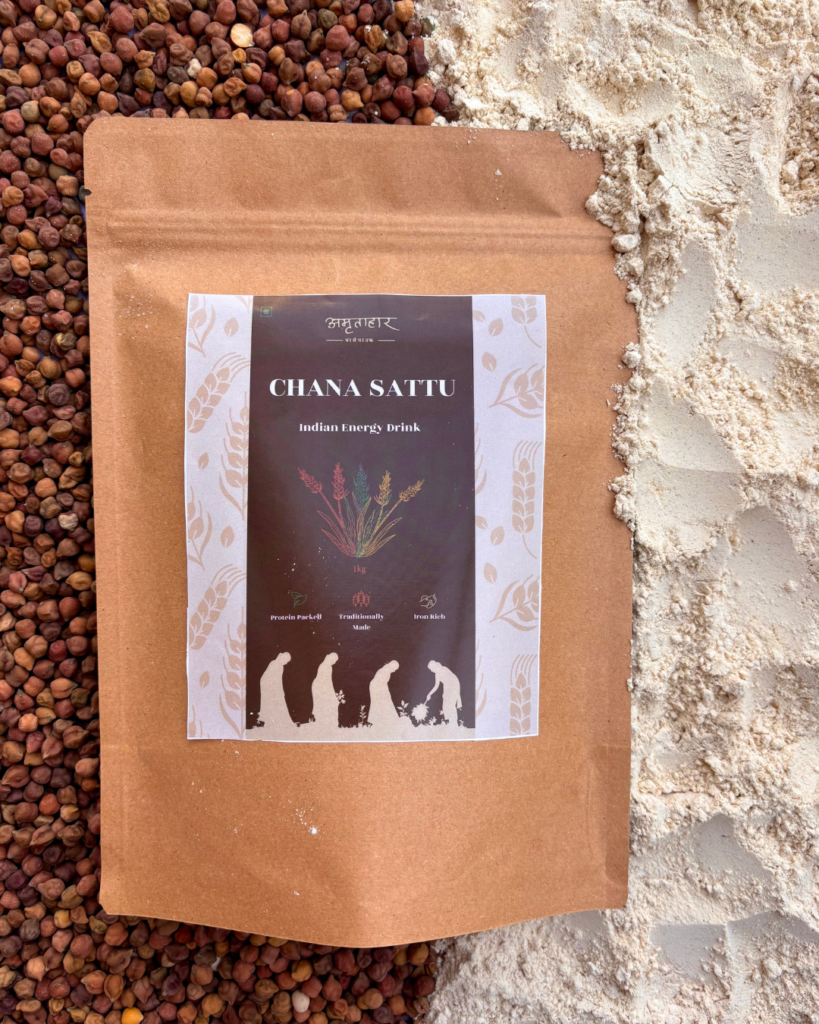
Chana sattu is made by roasting Bengal gram (chana) and grinding it into a fine flour. Roasting gives it a distinct, nutty flavour and means it can be consumed without another cooking step when prepared and handled appropriately.
Sattu has long been a part of everyday food traditions, particularly in Bihar, Jharkhand, Uttar Pradesh and parts of central India. It is commonly mixed with water and spices for a savoury drink, or used as a filling for litti and parathas.
One of its biggest advantages is convenience. You don’t need to prepare a batter or cook the flour before making a simple sattu drink.
At Amratahaar, our Chana Sattu is made from carefully roasted Bengal gram, with no additives or artificial ingredients.
What is Besan?
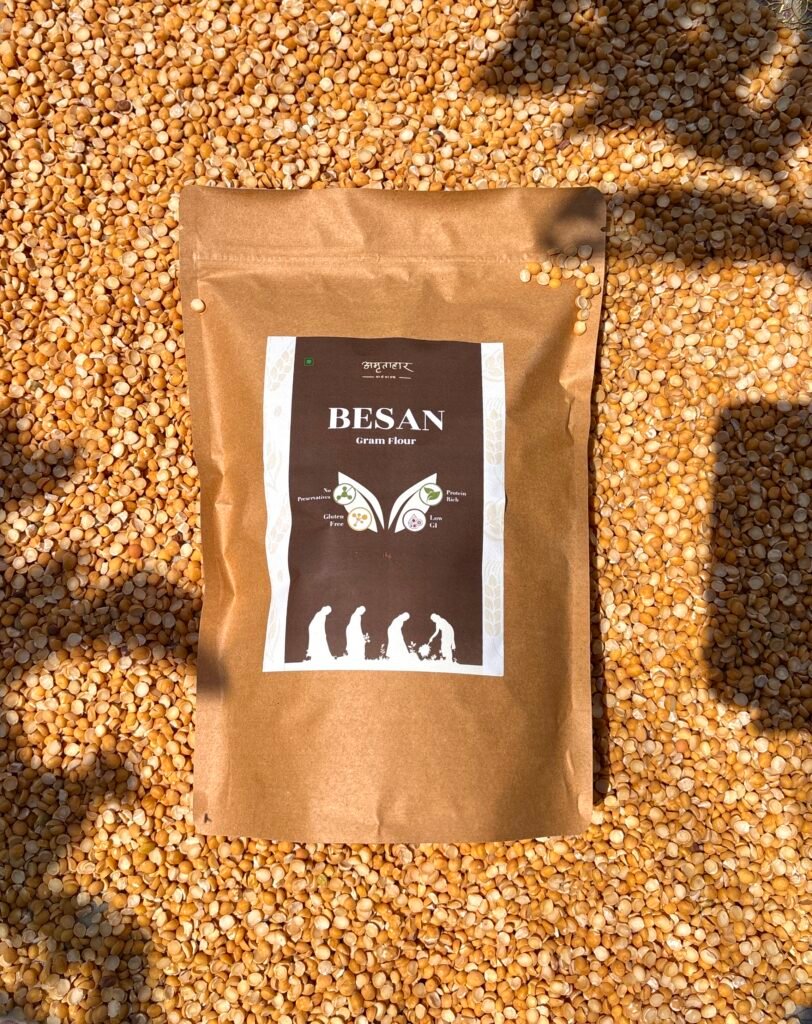
Besan, also known as gram flour, is generally made by grinding unroasted chana dal into a fine flour. Unlike sattu, it is a raw flour that needs to be cooked before eating.
Besan is a familiar ingredient in Indian kitchens. It goes into besan chilla, kadhi, dhokla, pakoras, laddoos and many regional dishes. It can also thicken gravies or help bind ingredients when making tikkis and cutlets.
Its mild, earthy flavour works well with vegetables, spices and other ingredients, making it a versatile option for everyday cooking.
Amratahaar Besan is another way to bring this familiar pulse-based staple into your kitchen.
Chana Sattu vs Besan Nutrition: Which Is Better?
Both sattu and besan can contribute plant-based protein, dietary fibre and other nutrients to your diet. But neither is automatically healthier in every situation.
The more useful question is what you want from the ingredient and how you plan to eat it.
1. Protein
Both flours provide plant-based protein because they come from chickpeas or Bengal gram.
Protein helps build and maintain body tissues and is an important part of a balanced diet. Including pulses and pulse-based foods in everyday meals can help increase your intake of plant protein.
Sattu is convenient when you want a quick drink or a filling snack without preparing a full meal. Besan can be used to make a more substantial dish, such as a vegetable chilla, especially when paired with curd or another protein-rich food.
Neither ingredient needs to be treated as a replacement for every other protein source. The amount you eat and the rest of your diet matter too.
2. Fiber and digestion
Both sattu and besan contain dietary fiber, which supports normal bowel function and contributes to a balanced diet.
Fiber intake is not just about adding one high-fiber ingredient. It also comes from the variety of grains, pulses, vegetables, fruits, nuts and seeds you eat throughout the day.
If you want to understand how everyday Indian staples can contribute to digestive health, read our guide to fiber in the Indian diet.
One thing to remember: increasing your fiber intake suddenly may cause gas or bloating. Introduce fiber-rich foods gradually and drink enough water.
3. Calories and fullness
Sattu and besan both provide energy, as well as protein and fibre. Neither is inherently a weight-loss food.
A sattu drink made with water, lemon and spices will have a different nutritional profile from one made with milk, sugar or jaggery. Similarly, a vegetable besan chilla cooked with a modest amount of oil differs from deep-fried pakoras.
If you’re trying to build more filling meals, consider the entire preparation rather than judging the flour alone.
For example, a besan chilla with vegetables and curd can make a balanced breakfast. A savoury sattu drink alongside an appropriate meal can be a convenient way to include more pulse-based food.
When Should You Use Sattu?
1. For a savoury sattu drink
Mix sattu with water, lemon juice, roasted cumin, coriander and a little salt. Adjust the consistency to your liking.
It makes a refreshing drink, particularly in warmer weather, and is an easy way to include a pulse-based ingredient without cooking a full dish.
You can also experiment with onion, green chilli and other spices for a more savoury flavour.
2. For litti and paratha fillings
Sattu is widely used in litti, particularly in Bihari cuisine. Its roasted flavour pairs well with mustard oil, ajwain, onion, green chilli and spices.
You can use a similar filling in parathas for a simple, satisfying meal.
3. For quick snacks and sweets
Sattu can be combined with jaggery, nuts or other ingredients to make simple sweet preparations and energy-dense snacks.
If you prefer less sweetness, adjust the amount of jaggery or choose a savoury preparation instead.
4. When you don’t want to cook the flour separately
This is where sattu has a practical advantage over besan. Because chana sattu is made from roasted gram, it can be mixed directly into a drink or suitable filling without needing to cook the flour again.
That makes it useful when time is short or when you want a quick addition to your usual routine.
Explore Amratahaar Chana Sattu if you’d like to try it in your own kitchen.
When Should You Use Besan?
Besan is the more versatile choice when you want to cook something from scratch.
1. For breakfast chilla
Mix besan with water, chopped onion, coriander, spices and your choice of vegetables. Cook the batter thoroughly on a pan to make a savoury chilla.
You can serve it with curd, chutney or a vegetable accompaniment.
It’s a useful way to turn a few everyday ingredients into a meal without relying on the same breakfast every morning.
2. For kadhi and other traditional dishes
Besan is commonly used to thicken kadhi and prepare several regional dishes. Its consistency and flavour make it useful in recipes where the flour needs to cook with liquid or other ingredients.
It can also be used in dhokla and other steamed preparations.
3. For pakoras and snacks
Besan forms the familiar coating or batter for pakoras. It can also help bind vegetables and other ingredients when making cutlets or tikkis.
The final nutritional profile depends on the recipe, including the amount of oil used and the other ingredients added.
4. For sweets and baking
Besan is used in preparations such as besan laddoo and barfi. Its flavour and texture make it suitable for several traditional sweets.
It can also be incorporated into selected savoury baking recipes, although it won’t behave exactly like wheat flour.
If besan is already a regular ingredient in your kitchen, you don’t need to limit it to one dish. A little experimentation can help you discover more ways to use it.
Take a look at Amratahaar Besan for your everyday cooking.
The Bottom Line
Sattu and besan may begin with the same ingredient, but they serve different purposes in the kitchen.
Sattu is made from roasted gram, making it convenient for drinks, fillings and quick preparations. Besan is made from unroasted gram and is useful for chilla, kadhi, snacks and a wide range of traditional dishes.
You don’t have to choose one and give up the other. Keeping both in your kitchen gives you more ways to use a familiar Indian pulse in your everyday meals.
At Amratahaar, we believe good food starts with the staples we return to every day. Explore our Chana Sattu and Besan and find the one that fits what you’re cooking.
FAQs
1. Is sattu the same as besan?
No. Chana sattu is made by roasting Bengal gram and then grinding it, whereas besan is generally made by grinding unroasted chana dal. Their processing, flavour and uses differ.
2. Which has more protein, sattu or besan?
Both provide plant-based protein. The exact amount depends on the product and its processing, so compare the nutrition labels of the specific flours rather than assuming one always contains more.
3. Can I drink besan with water like sattu?
No. Besan is a raw flour and should be cooked thoroughly before eating. Chana sattu is made from roasted gram and can be mixed into a drink without another cooking step.
4. Can I eat sattu every day?
For most people, chana sattu can be included regularly as part of a varied, balanced diet. The suitable portion depends on your overall diet and individual needs. It should complement meals rather than automatically replace them.
5. Is sattu better than besan for weight loss?
Neither is inherently better for weight loss. Both provide protein and fibre, but the overall meal, portion size and preparation method matter more than the choice of flour alone.