We think about protein at every meal, worry about sugar, and sometimes count our calories. But there’s one part of our diet that often gets overlooked: Fiber.
And the interesting thing is, fiber isn’t something unfamiliar to the Indian kitchen. Dietary fiber is found naturally in plant-based foods which means many of the foods already sitting on our plates can contribute to our daily Fiber intake.
Whole grains, dals, vegetables, fruits, nuts and seeds have always been part of the foods we eat. Yet, getting enough Fiber every day can still be a challenge.
For most adults, around 25–30 grams of dietary Fiber a day is a useful benchmark, although individual needs can vary.
So the question isn’t simply, “Which foods contain Fiber?”
It’s “How can we get enough Fiber from the foods we already eat?”
Let’s start with the basics.
What Exactly Is Dietary Fiber?
Dietary Fiber is the part of plant foods that our bodies don’t fully digest and absorb.
Unlike carbohydrates, proteins and fats, Fiber passes through much of the digestive system without being broken down in the same way. Different types of Fiber work differently in the body, but together they play an important role in digestion and overall diet quality.
Fiber is naturally found in:
- Whole grains
- Pulses and dals
- Vegetables
- Fruits
- Nuts and seeds
This is why getting more Fiber doesn’t necessarily mean adding a new “health food” to your kitchen.
It’s already present in many of the foods you eat.
The challenge is getting enough of it.
Why Does Fiber Matter?
Fiber does more than simply help keep your digestive system regular.
Some types of Fiber add bulk to your stool and support normal bowel movements, while others can slow digestion and affect how quickly nutrients are absorbed.
Fiber-rich foods can also make meals more filling, which can be useful when building a balanced eating pattern.
That’s why regularly eating enough Fiber is associated with better digestive health and other aspects of overall health.
But here’s the important part:
You don’t need to find one magical source of Fiber.
Your intake can build up gradually across your meals — through your roti, dal, daliya, vegetables, fruits and other plant foods.
How Much Fiber Do You Actually Need?
For most adults, around 25–30 grams of Fiber a day is a useful target.
That number can sound like a lot when you see it on its own.
But Fiber doesn’t have to come from one particular food.
Your breakfast can contribute some.
Your roti and dal can contribute more.
Vegetables, fruit, grains, nuts and seeds can add to the total throughout the day.
How to Add More Fiber to Your Everyday Indian Diet
1. Start with the atta you use every day
For many Indian households, roti is an everyday staple.
That makes your choice of flour a simple place to start.
Whole-grain wheat flour contains the bran, germ and endosperm of the grain. Refined flour has much of the bran and germ removed during processing.
Since bran is a significant source of dietary Fiber, choosing a whole-grain flour can help you get more Fiber from a food you’re already eating regularly.
You don’t need to add another item to your meal.
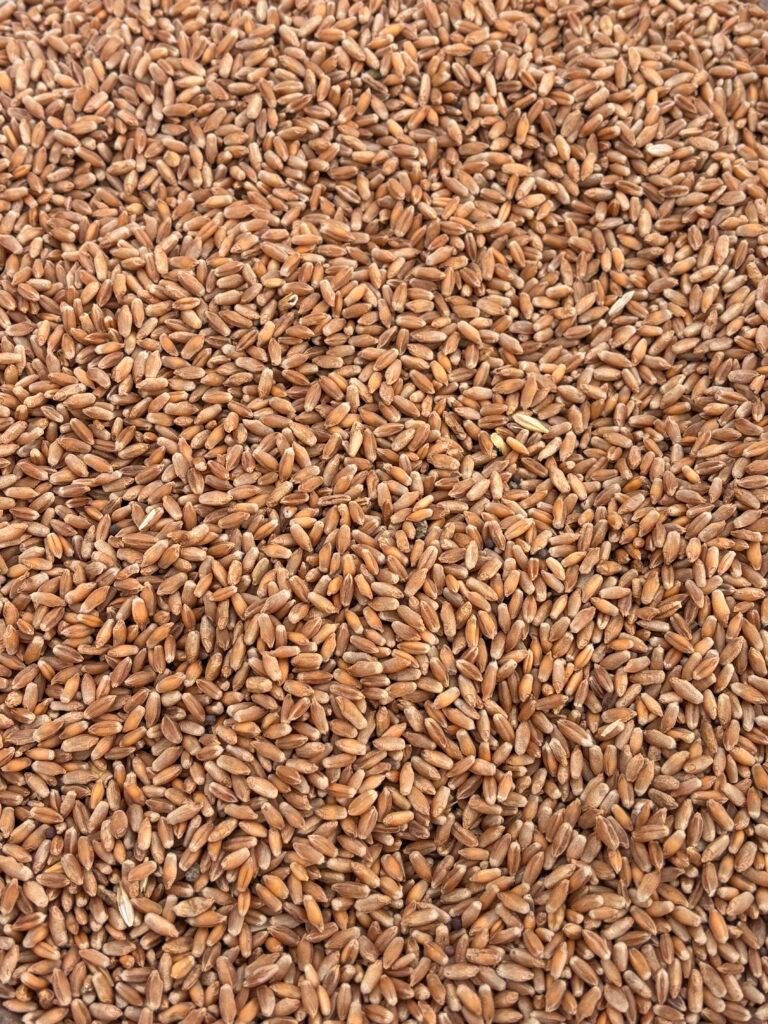
Our Multigrain Flour has 9.52g of Fiber per 100g, while Red Wheat Flour and Black Wheat Flour have 9.21g and 8.95g – meaning just two rotis from any of these already gives you roughly 5.5g of Fiber, over a fifth of your daily target.
Sometimes, the easiest change is simply looking at what’s in your atta.
2. Keep dal on the menu
Dal is already a familiar part of Indian meals and that’s exactly what makes it useful when you’re trying to increase your Fiber intake.
Moong, masoor, chana, urad, rajma and other pulses can all contribute Fiber to your diet.
Instead of thinking about Fiber as something you need to add separately, build meals around foods that naturally contain it.
At Amratahaar, our range of unpolished dals from Moong and Masoor to Chana and Urad makes it easy to keep these everyday staples on your plate.
3. Give daliya a place at the breakfast table
Breakfast is an easy meal to overlook when you’re thinking about Fiber.
If your usual options are mostly refined grains, daliya can be a simple alternative.
It can be prepared savoury with vegetables or made sweet with milk, fruit and nuts.
It’s familiar, versatile and easy to fit into an everyday meal which is exactly what you want when building a sustainable eating habit.
Amratahaar Red Wheat Daliya has 8.5g of Fiber per 100g – a single bowl (roughly 40g dry daliya) gives you around 3.4g of Fiber, an easy addition to breakfast.
4. Let vegetables do more of the work
You don’t need to start making enormous salads to eat more Fiber.
Add another serving of sabzi.
Mix vegetables into your poha, upma or dal.
Keep some cucumber, carrot or other vegetables alongside your meal.
These small additions can add up over the course of a day.
The goal isn’t to make every meal look like a “health meal.”
It’s simply to make vegetables a more consistent part of it.
5. Choose whole fruit over juice
Fruit is another simple way to add Fiber to your diet.
When you eat a whole fruit, you get the Fiber that naturally comes with it. Juicing, on the other hand, removes much of the fruit’s Fiber.
So instead of making fruit juice your regular way of consuming fruit, choose the fruit itself.
Guava, apple, pear, orange and many other whole fruits can easily become part of breakfast or a snack.
6. Don’t assume “multigrain” automatically means high-Fiber
The word “multigrain” sounds healthy, but the label itself doesn’t tell you how much fibre a product contains.
What matters is which grains are being used, whether they are whole grains, and how the product is made.
So when choosing a multigrain flour, don’t stop at the front of the packet.
Look at the ingredients too.
It’s a small habit that can help you make a more informed choice rather than relying on a health-sounding label.
One Thing to Remember When Increasing Fiber
If your current diet is relatively low in Fiber, don’t try to jump straight to 30 grams overnight.
Increase your Fiber intake gradually and make sure you’re drinking enough fluids. A sudden increase in Fiber can cause digestive discomfort for some people.
Think of it as building a habit rather than chasing a number.
Fiber Comes From the Whole Meal
At Amratahaar, these everyday staples are also at the heart of what we make — from whole-grain Kathiya Gehu Atta, Kala Gehu Atta and Multigrain Atta to Red Wheat Daliya and unpolished dals.
The idea is simple:
You don’t have to completely change what you eat.
Sometimes, eating better starts with choosing better versions of the foods that are already a part of your everyday meals.