Open any jar of homemade Indian achar and you’ll notice the same thing — a generous layer of oil sitting right at the top. It’s tempting to think of this as excess, or just a byproduct of how pickles are made. In reality, that oil is doing real work. It’s not there by accident, and skimping on it changes far more than just the taste.
Oil Is What Keeps Achar Safe to Eat for Months
Indian achar isn’t refrigerated the way modern pickled foods often are, and it doesn’t rely on vinegar or heavy processing either. Instead, it depends on a much older method of preservation — oil acts as a natural seal, cutting off the fruit or vegetable pieces from air and moisture. Since bacteria and mould need oxygen and moisture to grow, a good layer of oil starves them of both, which is exactly why a well-made achar can sit at room temperature for months without spoiling.
This is also why the oil level matters over time — as you use the achar, the remaining pieces need to stay submerged. An achar left exposed to air, without enough oil covering it, is far more likely to spoil quickly, no matter how fresh it was to begin with. In fact, properly stored achar doesn’t just stay safe over time — it actually gets better with age.
Read more: Why Does Achar Taste Better Over Time?
Why Mustard Oil Specifically
Not all oils are used for achar, and that’s not just a taste preference. Mustard oil contains natural compounds with antimicrobial properties, which add an extra layer of protection on top of the basic oxygen-blocking effect. It also has a strong, pungent flavour that complements the spice blends used in most Indian pickles — fenugreek, fennel, mustard seeds, and asafoetida all come through more distinctly in mustard oil than in a neutral cooking oil.
Traditionally, this oil was extracted using a slow, wood-pressed method rather than modern high-speed processing. Cold-pressed mustard oil retains more of its natural pungency and nutrients, which is part of why old-style achar tends to taste noticeably sharper and more flavourful than mass-produced versions made with refined oil.
Oil Also Shapes the Flavour, Not Just the Shelf Life
Beyond preservation, oil plays a real role in how the spices actually taste. Many of the spices used in achar are fat-soluble, meaning their flavour compounds release and blend properly only in the presence of oil, not water. This is why a dry, under-oiled achar often tastes flat or inconsistent, while a properly oiled one develops a rounder, more balanced flavour over the weeks it matures.
So, Does More Oil Always Mean Better Achar?
Not necessarily more — but enough matters. The goal isn’t to drown the pickle, but to make sure every piece stays fully submerged and protected throughout its shelf life. An achar swimming in oil isn’t automatically better quality, but one that’s under-oiled is genuinely more likely to spoil, regardless of how good the spice blend is.
Why Amratahaar’s Achar Is Different?
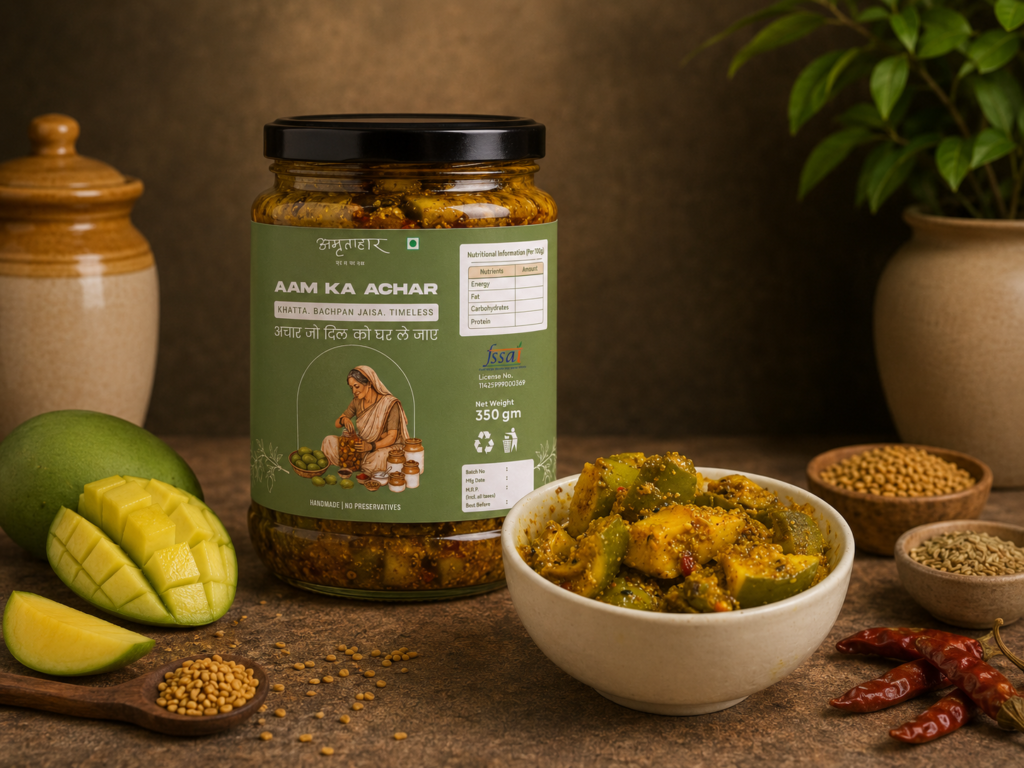
This is exactly where most store-bought achar cuts corners — using refined, mass-produced oil to save cost, or barely enough of it to pass as “preserved.” Amratahaar’s achar starts from the ground up, literally: every ingredient, including the mustard used for our oil, is grown on our own farms. That mustard is then cold-pressed in-house, so the oil going into every jar is one we grow and press ourselves.
Conclusion: An Old Method That Still Makes Sense
Long before refrigeration or preservatives, Indian households had already figured out how to keep food safe and flavourful for months using nothing more than oil, salt, and spice. That oil layer on top of your achar jar isn’t excess — it’s the reason the achar inside it is still good to eat, weeks or months later.