Have you ever noticed that a freshly made jar of achar can taste quite different after it has rested for a while?
The mango may be the same. The spices may be the same. The mustard oil may be the same. Yet after some time, the achar often tastes deeper, richer and more balanced.
That isn’t just your imagination. Time is an important part of traditional Indian pickle-making.
When achar is prepared, salt, spices, oil and fresh ingredients are brought together. They don’t immediately taste like one unified dish. The salt is still settling into the ingredients, the spices haven’t fully infused, and the different flavors can taste quite sharp on their own.
As the pickle rests, that begins to change.
What happens inside a jar of achar?
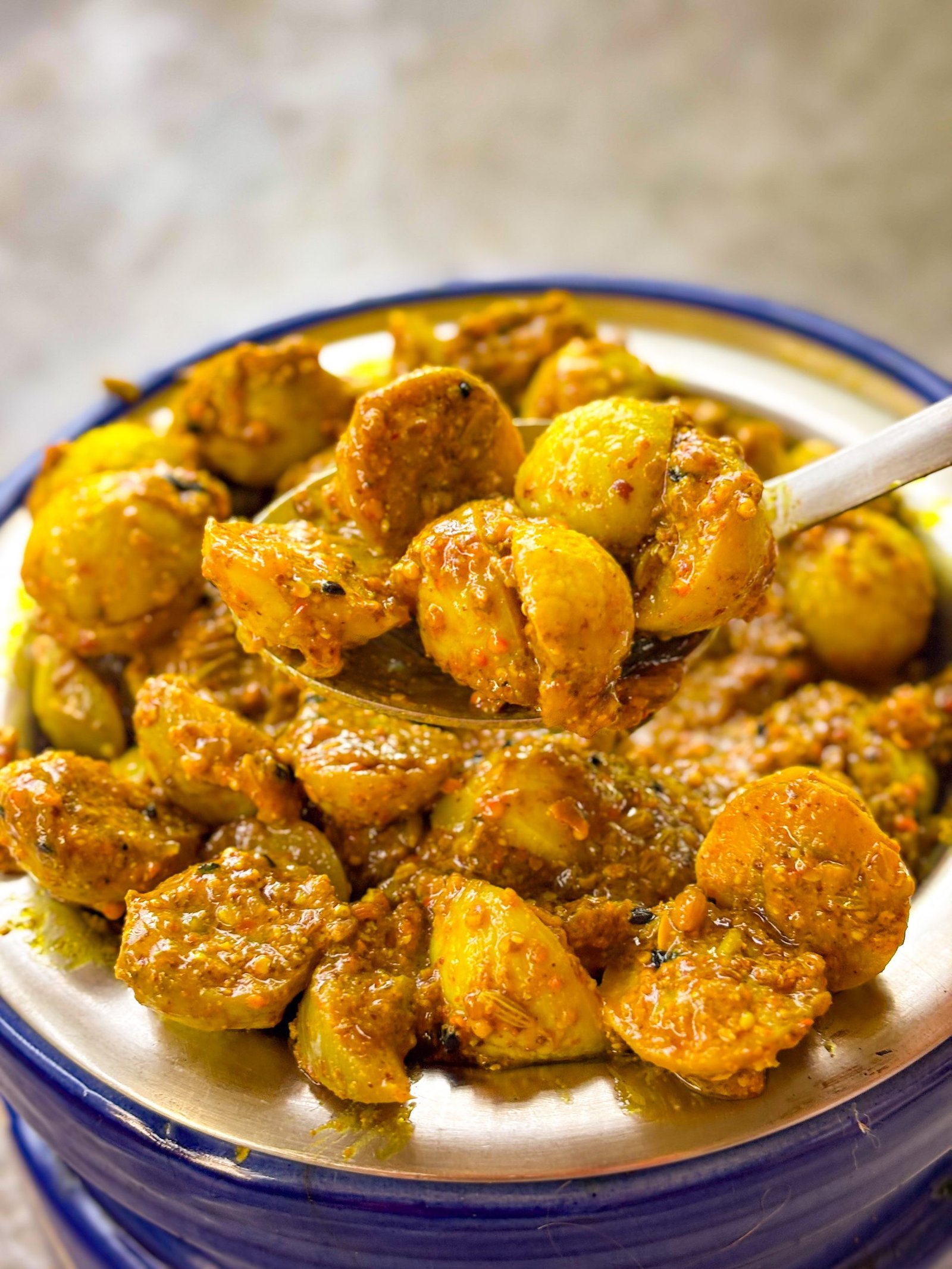
One of the most important things happening is moisture movement. Salt draws moisture from fruits and vegetables through a process called osmosis.
This changes the texture of the ingredients and helps the seasoning move through the mixture. Salt also plays an important role in traditional pickle preservation.
At the same time, spices have more time to interact with the ingredients. Mustard seeds, fennel, fenugreek, chilli and other spices don’t simply sit on the surface. Their flavours gradually become more integrated with the fruit or vegetable and the oil.
This is why a freshly mixed achar can taste quite intense, while a rested achar can taste more rounded. The flavors haven’t disappeared. They’ve simply had time to come together.
Why is mustard oil so important in Indian achar?
Mustard oil is a traditional ingredient in many Indian pickle recipes, particularly oil-based varieties such as mango pickle. It contributes its own distinctive pungent aroma while helping coat the ingredients and distribute flavours from the spices.
Oil also helps carry many flavor compounds from spices, which is one reason the aroma and taste of a traditional achar can become more pronounced as it rests.
This is why the oil in an Indian pickle isn’t merely there to keep the ingredients covered. It is part of the flavour itself.
Of course, every pickle recipe is different. The type of ingredient, amount of salt, spices, oil and method of preparation all affect the final taste.
Does every achar ferment?
No—and this is an important distinction.
Not every Indian achar is fermented.
Many traditional Indian pickles are cured or matured using combinations of salt, spices and oil. Others are made through fermentation, where beneficial microorganisms produce acids that change the flavour and texture of the food.
So when we say that an achar tastes better after it has had time to rest, that does not automatically mean fermentation has taken place. Sometimes the change is simply the result of the ingredients having time to cure, absorb flavour and develop together.
So, why does achar taste better with time?
Because good achar is not just about what goes into the jar. It’s also about what happens after it goes in.
Salt changes moisture.
Spices have time to infuse.
Oil carries flavour.
Textures gradually change.
And the sharpness of individual ingredients begins to settle into something more harmonious.
That’s why traditional pickle-making has always valued patience.
In a world where so much food is made to be ready instantly, achar reminds us that some flavours are worth waiting for.
At Amratahaar, that idea is close to home. Our achar is rooted in traditional recipes, familiar ingredients and the kind of careful preparation that has been part of our kitchen for years.
Because sometimes, all a simple meal needs is a little achar—and a little time.
FAQs
Does achar get better the longer it sits?
Not always. Achar often develops a deeper, more balanced flavour as it rests, but there is a point where longer storage does not improve the taste.
How long should achar rest before eating?
It depends on the recipe. Many traditional achars are allowed to rest for a few days to a couple of weeks so the spices, oil, and ingredients can develop deeper flavour. But typically it should rest for 10 to 15 days.
Can I eat achar immediately after making it?
Yes, you can. However, freshly made achar may taste sharper and less blended. Resting it allows the spices and other ingredients to come together.
How can I tell if older achar is still good?
Check for mould, an unusual or foul smell, or noticeable changes in colour or texture. When in doubt, it is safer not to eat it.