Walk into any store today and you’ll see “whole wheat” printed across almost every atta packet, often right next to phrases like “100% natural” or “healthy choice.” It’s easy to assume whole wheat and whole grain mean the same thing. They don’t. Understanding the key difference between whole wheat and whole grain isn’t just a technicality, it changes what you’re actually eating, and how much of the grain’s real nutrition survives the journey from farm to flour.
What Is a Whole Grain?
A whole grain refers to any cereal grain that retains all three original parts of the seed – the bran (the fibre-rich outer layer), the germ (the nutrient-dense core), and the endosperm (the starchy centre).
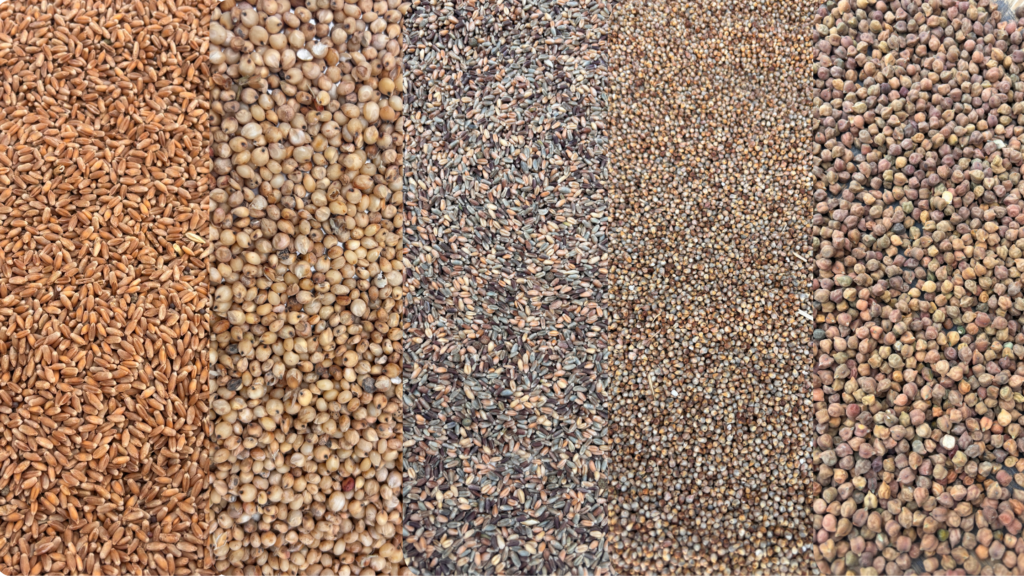
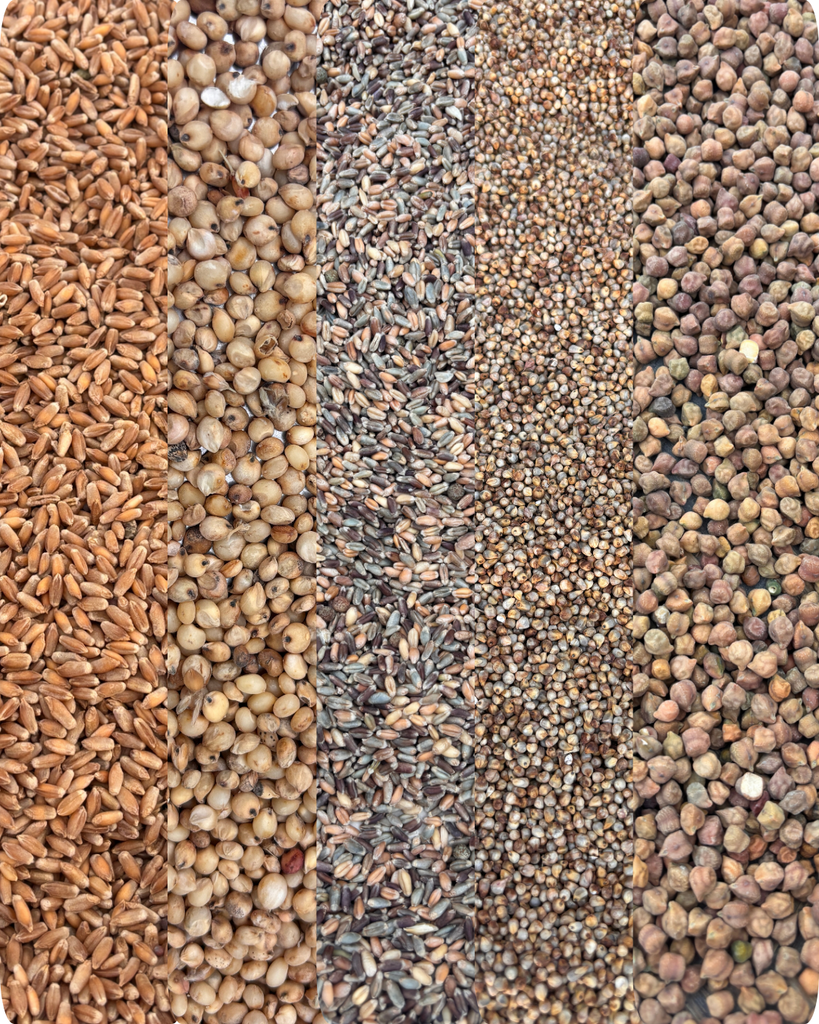
This applies to wheat, but also to rice, oats, millets like bajra and jowar, and pulses like chana. In other words, “whole grain” is a category, not a single ingredient – it simply means the grain hasn’t been stripped down to just its starchy core.
This intact structure matters because most of a grain’s fiber, B-vitamins, and minerals live in the bran and germ, not the endosperm.
When any grain, wheat or otherwise, keeps all three parts, it digests more slowly and delivers meaningfully more nutrition per serving than a refined version of the same grain.
What Is Whole Wheat?
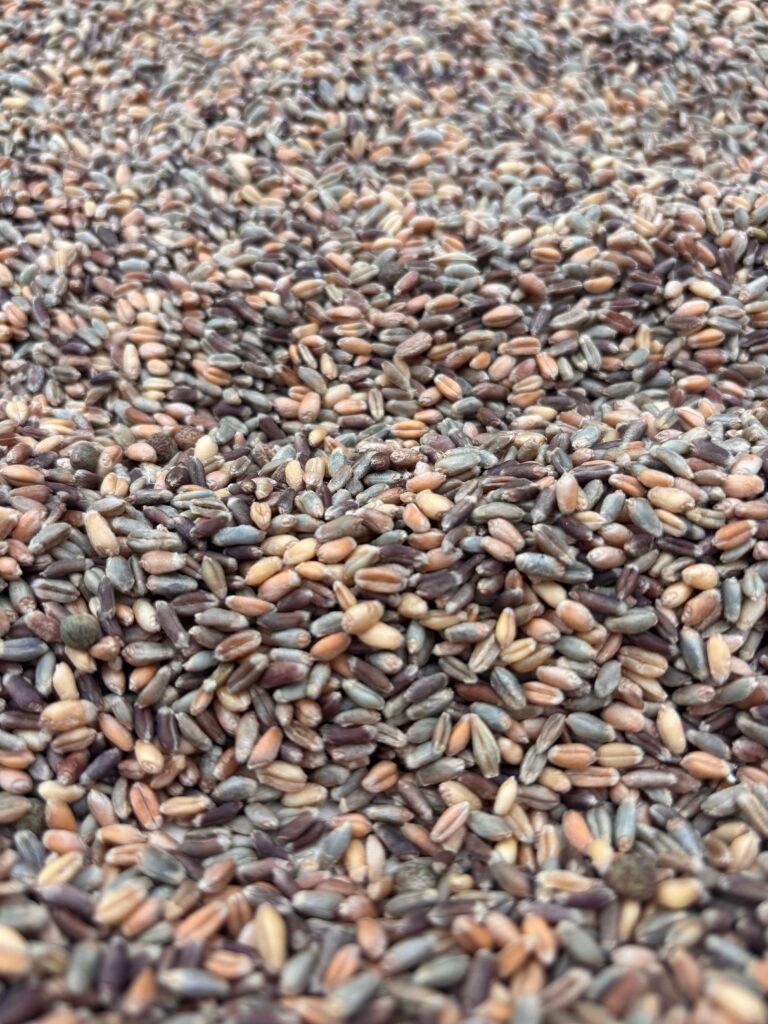
Whole wheat, on the other hand, refers specifically to wheat, Triticum, in botanical terms, that has kept its bran, germ, and endosperm intact during milling. It is, essentially, one specific example of a whole grain, not a separate or superior category.
This distinction matters because “whole wheat” tells you the type of grain, not necessarily how much of its natural structure has survived processing.
Two packets can both say “whole wheat” on the label, yet contain very different amounts of actual bran and germ, depending on how the wheat was milled and whether anything was removed and added back later.
Why “Whole Wheat” on a Label Doesn’t Always Mean What You Think
This is where most confusion, and a fair bit of marketing sleight of hand, comes in. Many commercial “whole wheat” flours are roller-milled at high speed and high heat, a process that strips away a significant portion of the bran and germ before some of it is added back in afterward to justify the whole wheat label. The result technically qualifies as whole wheat, but it isn’t nutritionally close to wheat that was ground gently, with its structure left intact.
This is exactly why the milling method matters as much as the grain itself. Stone-ground (chakki) atta grinds wheat slowly at low temperatures, keeping the bran, germ, and endosperm together as they were in the original grain rather than separating and reassembling them industrially. We’ve compared this in detail in Stone-Ground Flour vs Roller-Milled Flour: Which Is Better?
So Which Should You Actually Look For?
For everyday Indian cooking, the honest answer is: both matter, but in different ways.
- “Whole grain” is the broader promise, it tells you the fibre-rich, nutrient-dense parts of the grain haven’t been thrown away, whether that grain is wheat, bajra, jowar, or something else entirely.
- “Whole wheat” simply tells you which grain you’re eating. It’s a meaningful claim only when the wheat has genuinely been milled without stripping and reassembling its structure.
A useful habit is to stop treating “whole wheat” as an automatic mark of quality, and instead ask how it was milled and whether other whole grains are part of your diet too, not just wheat.
Where Amratahaar Fits Into This
Amratahaar’s Black Wheat and Red Wheat (Kathiya Gehu) are genuinely whole grain by nature — each retains its intact bran and germ, giving you the fibre and lower gluten density that gets lost in modern refined wheat.
You can read more about both in Black Wheat Explained – Nutritional Science, Lower Gluten & Digestive Benefits and Red Wheat: A Traditional Grain with Everyday Strength.
And because whole grain nutrition isn’t limited to wheat, our Multigrain Atta combines black and red wheat with bajra, jowar, and chana — bringing together multiple whole grains, not just one, in a single everyday flour.
Want to see how single-grain whole wheats compare to multi-grain blends? Compare regular whole wheat, Kathiya red wheat, black wheat, and multigrain flours on our Flour Comparison Tool to evaluate fiber levels, grain compositions, and kitchen uses before buying.
Conclusion: Two Different Questions, Both Worth Asking
Whole grain and whole wheat answer two different questions — one is about which grain you’re eating, the other is about whether that grain has been left intact. A flour can be whole wheat without being meaningfully whole grain, if the milling process has quietly stripped away most of what made it wholesome in the first place.
The real marker of quality isn’t the label — it’s whether the bran, germ, and endosperm actually made it into your roti together.
FAQs
Which is healthier: whole grain or whole wheat?
Whole wheat is a type of whole grain. Both can be healthy when they retain the bran, germ, and endosperm. The key is choosing 100% whole grain or whole wheat flour that has not been heavily refined.
Does multigrain mean whole grain?
No. “Multigrain” simply means the flour contains more than one grain. It does not necessarily mean that all those grains are whole grains. Check the ingredient list to see whether the grains are whole or refined
Is eating only whole wheat enough, or should I eat other whole grains too?
Whole wheat can be part of a healthy diet, but eating a variety of whole grains gives you a wider range of fibre and nutrients.
Is chakki atta the same as whole wheat atta?
Not exactly. Whole wheat refers to the grain used, while chakki refers to flour traditionally ground using a chakki or stone mill.
Is whole grain gluten-free?
Not always. Whole grain describes how much of the grain is retained, not whether it contains gluten. Whole wheat is a whole grain that contains gluten, while naturally gluten-free whole grains include rice, millet, and corn.