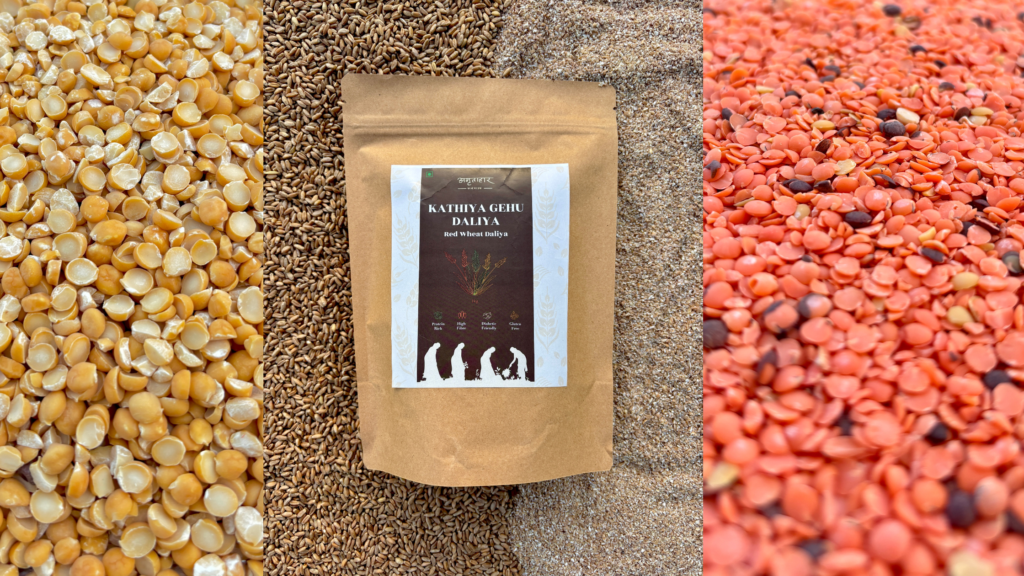
Before modern hybrid wheat varieties became common, red wheat was one of the most widely grown grains across Indian farms. Known for its strong structure, earthy flavour, and wholesome nature, red wheat remains a trusted grain in many traditional households.
What is Red Wheat?
Red wheat gets its colour from the natural pigments in its bran. Unlike refined wheat flour, red wheat is typically consumed as a whole grain, meaning the outer bran is retained during milling. This gives the flour a slightly darker colour, fuller texture, and richer taste. But how does red wheat flour actually differ from the regular wheat flour we use every day? Our guide to red wheat flour vs regular wheat flour breaks down the differences in colour, texture, nutrition, and processing.
Traditional Lal gehun varieties—especially those grown in regions like Bundelkhand—are hardy, naturally resilient, and well-suited to Indian cooking styles.
Nutritional Benefits of Red Wheat
Red wheat or Lal Gehu is valued for its balanced, everyday nourishment:
- A natural source of dietary fibre from the intact bran
- Contains essential plant nutrients found in whole grains
- Provides steady, sustained energy suitable for daily meals
- Less processed when stone-ground, helping preserve the grain’s natural structure
Why Bundelkhand’s Red Wheat is Gaining Attention
In recent years, Red Kathiya wheat from Bundelkhand has drawn renewed attention due to its traditional seed varieties and whole-grain characteristics. According to publicly discussed research and government-led initiatives, this region’s red wheat has been studied for a relatively lower glycaemic response compared to highly refined wheat products, contributing to its growing demand in international markets.
Why Red Wheat Became Less Common
With the rise of refined flour and high-yield wheat varieties, traditional red wheat slowly lost popularity in large-scale farming. Many farmers shifted to crops that offered faster commercial returns. Today, red wheat is grown in smaller quantities by farmers who continue to value traditional seeds and growing practices.
Amratahaar’s Red Wheat Flour
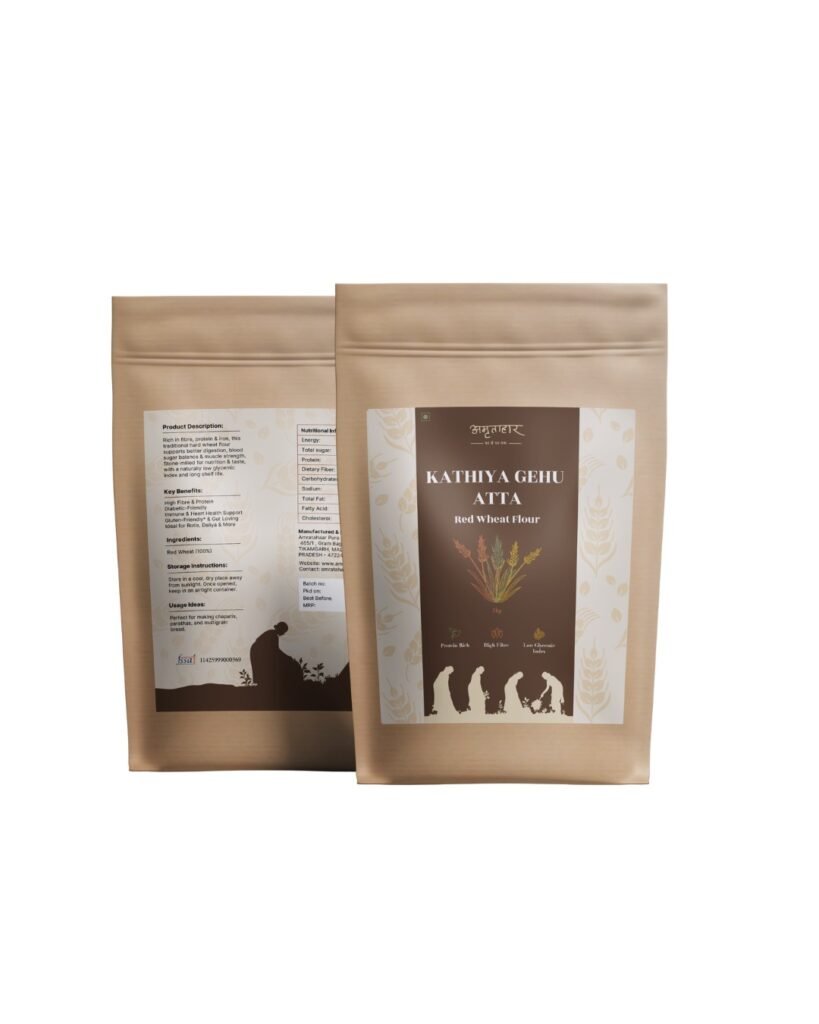
Amratahaar’s red wheat flour is stone-ground from whole red wheat grains, without additives or improvers. We retain the bran and natural texture of the grain, allowing its inherent qualities to shine through.
Chosen carefully and processed gently, our red wheat flour reflects our belief that everyday food should be honest, nourishing, and close to nature. And it isn’t limited to one kind of meal. From everyday rotis to breads, pancakes, and other home-cooked recipes, red wheat flour can fit easily into your regular kitchen. Explore our guide on how to use red wheat flour for simple ideas to get started.
Choosing Traditional Grains, Thoughtfully
Both black wheat and red wheat represent a return to slower, more mindful food systems. By choosing whole grains that are less processed and traditionally grown, you support not only your own everyday nourishment but also farming practices rooted in care and respect.
At Amratahaar, these grains are not marketed as miracles—they are simply allowed to be what they naturally are.
FAQs
Is Red wheat a traditional grain?
Some red wheat varieties are traditional grains. Kathiya Gehu, for example, is a traditional wheat variety associated with the Bundelkhand region.
Is Red Kathiya wheat healthy?
Yes. Red wheat is a whole grain and provides fibre, protein, vitamins and minerals.
Is Red wheat better than white wheat?
Neither is always better. Whole-grain red wheat can provide more fibre and nutrients than refined white wheat flour, but the overall nutrition depends on how the flour is processed.
Is Kathiya Gehu gluten-free?
No. Kathiya is a whole wheat variety and naturally contains gluten. However, its traditional gluten composition makes it easier to digest for many people compared to modern processed wheats.