Quick question: do you know what kind of wheat is in your atta?
Not the brand. Not whether it’s chakki atta or multigrain.
The actual wheat.
Most of us simply think of wheat as wheat. But there are different varieties, and they don’t all have the same colour, flavour or nutritional profile.
Red Wheat or Lal Gehu is one of them.
So when you put Red Wheat Atta next to the atta you normally use, what actually changes?
Is it just the colour? Does it have more fibre? What about antioxidants? And does your roti taste any different?
Let’s find out.
The Difference between Red Kathiya Wheat and Regular White Wheat
| Red Kathiya Wheat Flour | Regular White Wheat Flour | |
| Grain color | Naturally reddish-brown grain | Naturally pale/golden grain |
| Fiber | 9.21 g/100 g in Amratahaar Red Wheat Atta | Lower in regular wheat flour, varies with how the flour is made |
| Plant Compound | Rich in phenolic compounds; red wheat varieties can have higher levels of certain phenolic acids | Contains phenolic compounds too, but generally lower levels. |
| Antioxidant | Higher antioxidant activity than white wheat has been reported in studies of red wheat varieties | Generally lower antioxidant activity than red varieties in comparative studies |
| Flavor | Deeper, stronger wheat flavour | Milder, more familiar wheat flavour |
What is Red Wheat really?
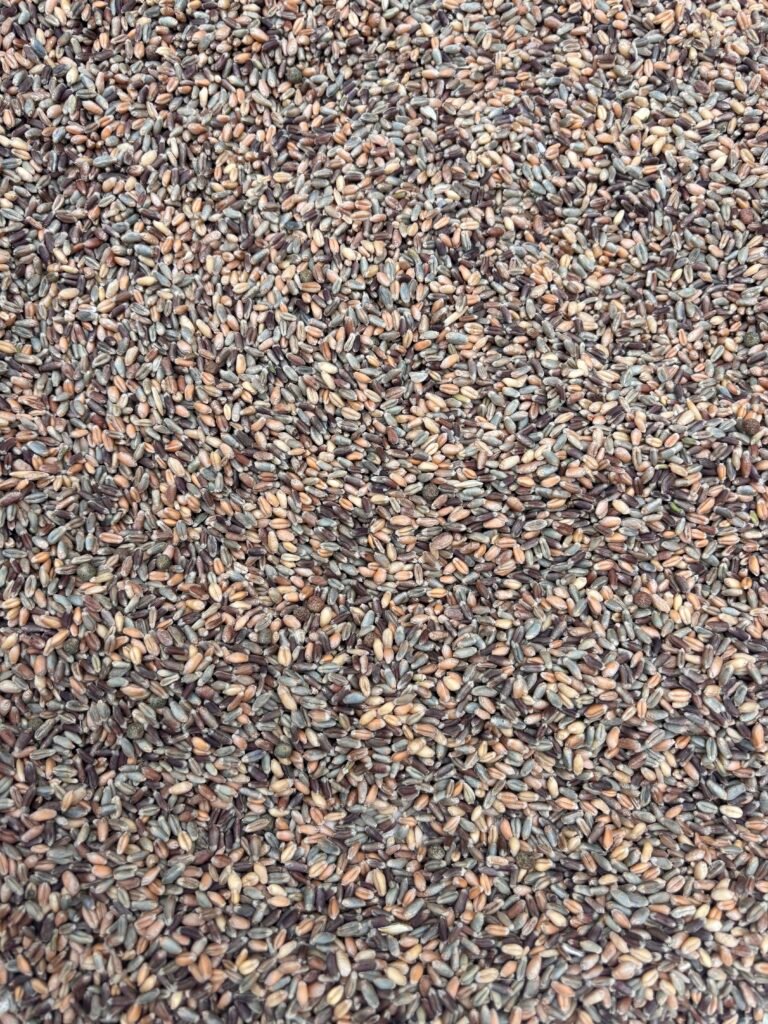
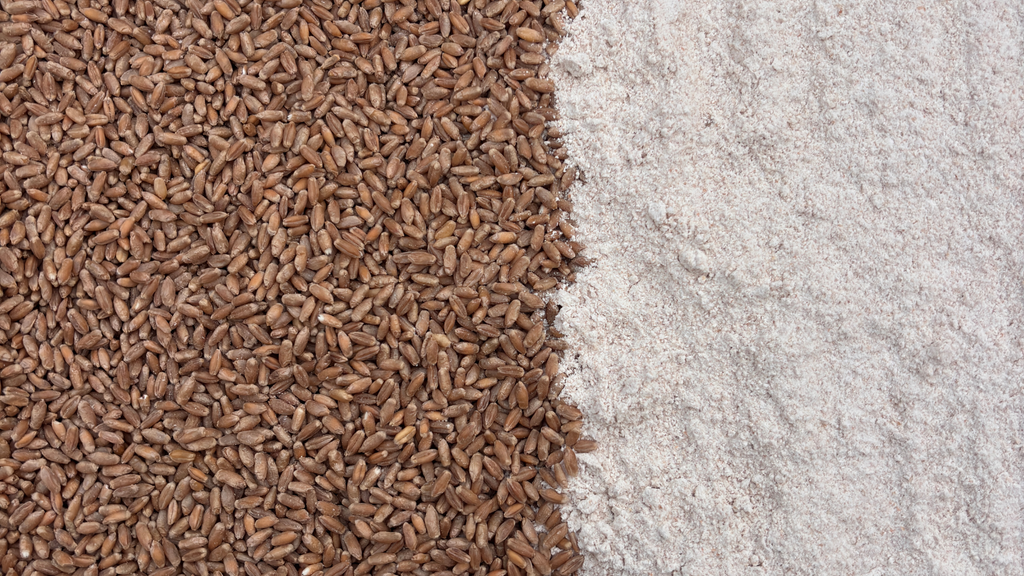
Red Wheat is simply wheat with a naturally reddish-brown bran. The colour comes from compounds already inside the grain — nothing added, nothing artificial.
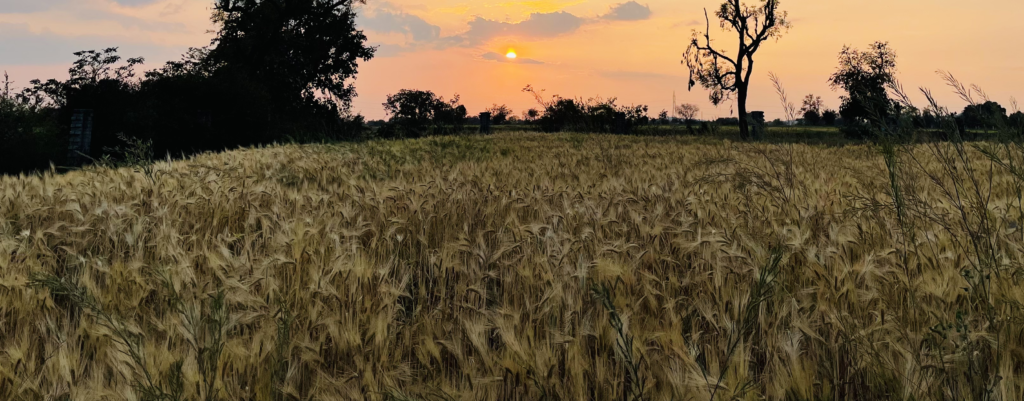
Amratahaar’s Kathiya Gehu Atta goes a step further, though. It’s not just “red wheat” in a general sense — it’s a specific variety called Kathiya Wheat, grown in the Bundelkhand region of Uttar Pradesh and Madhya Pradesh.
It’s officially recognized. In 2024, Bundelkhand Kathiya Gehu became the very first Geographical Indication (GI) tag ever awarded to farm produce from the Bundelkhand region — the same kind of protected status given to things like Darjeeling tea. It means this wheat’s identity is legally tied to where it’s grown.
Does Red Wheat Flour taste different?
Yes — but not always in the direction you’d expect.
Wheat scientists have actually tested this a lot (there’ve been dozens of taste-test studies over the years), and the results are a bit of a mixed bag. In some tests, red wheat came out slightly more bitter at the crust. In others, the crust was more bold and toasty, but the inside of the bread was actually sweeter and creamier than white wheat.
What’s consistent: red wheat generally has a stronger, more “wheaty” flavour — you’ll notice it more, especially if you’re used to a milder atta. Some people love that. Some people find it a little more assertive than they’re used to. Neither reaction is wrong.
What’s interesting is that this flavour isn’t just for rotis. Red Wheat Atta can be used for much more, from everyday parathas to laddoos, cookies, bread and even momos.
Curious about what else you can make with it? We’ve put together a guide on how to use Red Wheat Flour, with easy recipes and everyday ideas.
So, should you switch
If you’re already using a good whole-wheat atta, you’re doing just fine. But if you want something more from your everyday roti you can try Red Wheat Flour.
With Amratahaar Red Wheat Atta, you get 9.21 g of fibre and 8.15g of protein per 100 g, a naturally deeper colour, a more pronounced wheat flavour, and the naturally occurring plant compounds that come with Kathiya Wheat.
And for us, there’s something more to the grain too.
It’s Kathiya Wheat, grown in Bundelkhand — the region it has been a part of for generations.
So if you’re curious about what a different wheat can bring to your everyday roti, give it a try.
Sometimes, the simplest change is just choosing to know what’s in your atta.
Taste the Difference Yourself.
FAQs
Is Red Wheat Atta good for weight loss?
Red Wheat Atta can be a good choice as part of a balanced diet. Amratahaar Red Wheat Atta has 9.21 g of fibre per 100 g, and fibre can help you feel fuller after meals. But no single atta causes weight loss on its own.
Does Red Wheat Atta have gluten?
Yes. Red Wheat is wheat, so it naturally contains gluten. It is not suitable for people with celiac conditions or those who need to avoid gluten.
Is Red Wheat Atta good for diabetes?
Red Wheat Atta is a whole-grain flour which is low in GI and provides 9.21 g of fibre per 100 g. Fibre is an important part of a balanced diet for people managing blood sugar. However, portion size and your overall meal matter too.
Why is Red Wheat Atta more expensive than regular atta?
Red Wheat can cost more because it is a specific wheat variety rather than a generic wheat flour. At Amratahaar, the wheat is also stone-ground and freshly milled in small batches, rather than milled and stored months in advance.