India’s food habits have always been closely connected to its agricultural seasons. The grains available, the crops harvested and the weather all influence what finds its way into our kitchens.
When we think of winter food, a few familiar dishes usually come to mind: makki ki roti, sarson ka saag, bajra khichdi and a warm bowl of porridge. But Indian kitchens have many more ways of cooking with grains than we often realise.
From a warm bajra drink to soft millet dumplings and sweet ragi treats, different regions have found interesting ways to use their local grains. And the best part? Many of these preparations don’t need complicated ingredients or special cooking equipment.
If you have bajra, jowar, ragi, makki or other Indian winter grain flours sitting in your kitchen, here are seven recipes worth trying this winter.
1. Bajra Raab: A Warm, Comforting Drink
If you’ve never tried raab, think of it as a warm, lightly spiced drink made with flour. It is enjoyed in parts of Rajasthan and Gujarat, with different households preparing it in their own ways.
Unlike a regular porridge, raab is thinner and easy to sip from a cup. It makes a lovely breakfast or an evening drink when you want something warm.
What you’ll need:
- 2 tablespoons bajra flour
- 1 teaspoon ghee
- 1½ cups water
- ½ teaspoon grated ginger
- ¼ teaspoon ajwain
- A pinch of salt
- A little jaggery, if you prefer a sweeter version
How to make it:
- Heat ghee in a small pan and add ajwain.
- Add bajra flour and roast it on low heat for 2–3 minutes. Keep stirring so it doesn’t burn.
- Slowly pour in the water while stirring to prevent lumps.
- Add ginger and salt, then let it simmer for 8–10 minutes until it reaches a smooth, drinkable consistency.
- Add jaggery if you like a hint of sweetness and serve warm.
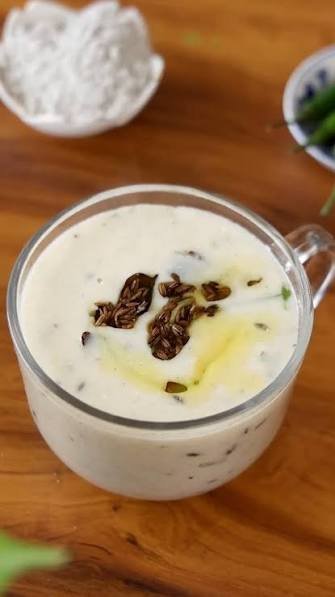
A small tip: If the mixture becomes too thick, simply add a little more hot water. Raab should be easy to sip, not as thick as halwa.
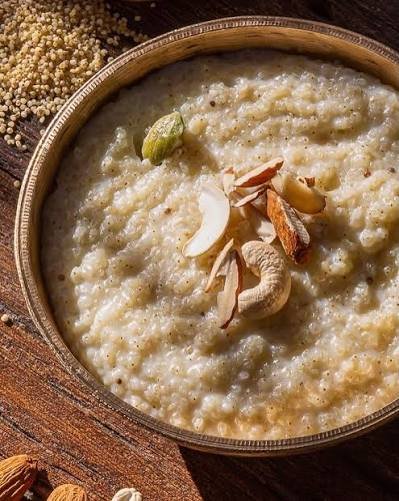
2. Jhangora Kheer: A Different Take on Rice Kheer
Most of us have grown up eating rice kheer. But have you tried making it with jhangora, also known as barnyard millet?
Popular in parts of Uttarakhand, jhangora is used in several regional preparations, including kheer. The tiny grains soften as they cook in milk and give the dessert a lovely texture.
What you’ll need:
- ¼ cup jhangora (barnyard millet)
- 3 cups milk
- 3–4 tablespoons sugar, or to taste
- 2–3 green cardamom pods, crushed
- 1 tablespoon chopped almonds or cashews
- A few raisins
How to make it:
- Rinse the jhangora well and soak it for 20–30 minutes. Drain before cooking.
- Bring the milk to a gentle boil in a heavy-bottomed pan.
- Add the jhangora and cook on low heat, stirring occasionally.
- Once the grains become soft and the milk thickens, add sugar and cardamom.
- Add the nuts and raisins, cook for another 2–3 minutes and turn off the heat.
Serve warm or chilled, depending on how you like your kheer.
A small tip: Keep stirring occasionally while the millet cooks so it doesn’t stick to the bottom of the pan. If the kheer thickens too much, loosen it with a little warm milk.
3. Jowar Thalipeeth: A Savoury Breakfast Worth Trying
Thalipeeth is a Maharashtrian flatbread traditionally made using a mix of flours, spices and vegetables. It is a great way to bring different grains into one meal.
Jowar flour gives it a lovely earthy flavour, while onion, coriander and spices make every bite interesting. You don’t need a separate side dish either. A little curd or pickle is enough.
What you’ll need:
- ½ cup jowar flour
- 2 tablespoons besan
- 1 small onion, finely chopped
- 2 tablespoons chopped coriander
- ½ teaspoon cumin seeds
- ½ teaspoon red chilli powder
- A pinch of turmeric
- Salt to taste
- Water, as needed
- Oil or ghee for cooking
How to make it:
- In a bowl, mix jowar flour, besan, onion, coriander, cumin, chilli powder, turmeric and salt.
- Add water gradually and bring everything together into a soft, slightly sticky dough.
- Take a small portion and pat it into a flat round on a greased piece of parchment or a lightly wet surface.
- Make a small hole in the centre so it cooks evenly.
- Transfer carefully to a hot, greased tawa.
- Cook on medium-low heat on both sides, adding a little oil or ghee, until golden spots appear and the centre is cooked through.
Serve hot with curd, green chutney or your favourite pickle.
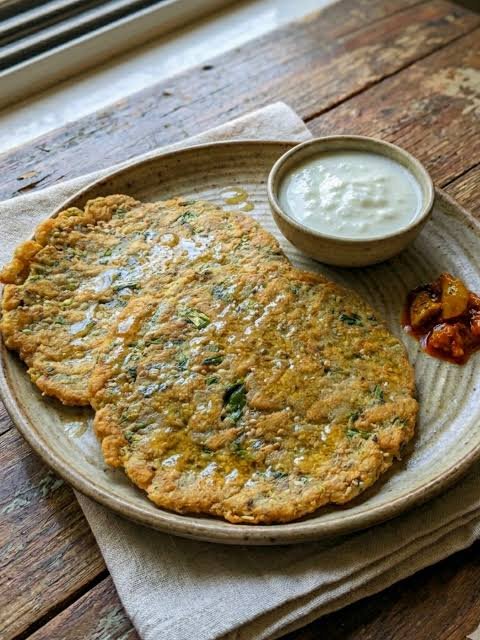
A small tip: Jowar dough can crack if it is too dry. Add a little warm water if needed, and pat the thalipeeth gently rather than trying to roll it like a wheat roti.
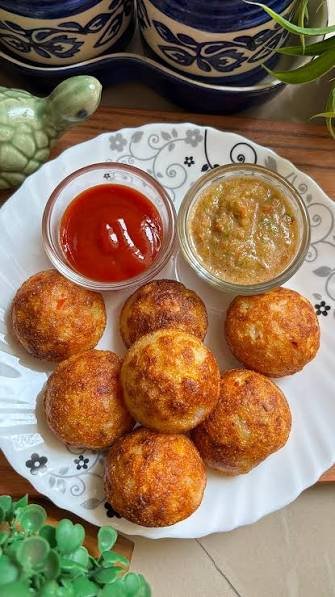
4. Multigrain Atta Vegetable Appe: A Little Something Different
Ever thought of making appe without the usual idli or dosa batter?
This version uses Multigrain Atta, along with everyday vegetables and spices, to make soft, savoury bites. They’re easy to prepare in an appe pan and make a nice change from the usual breakfast options.
What you’ll need:
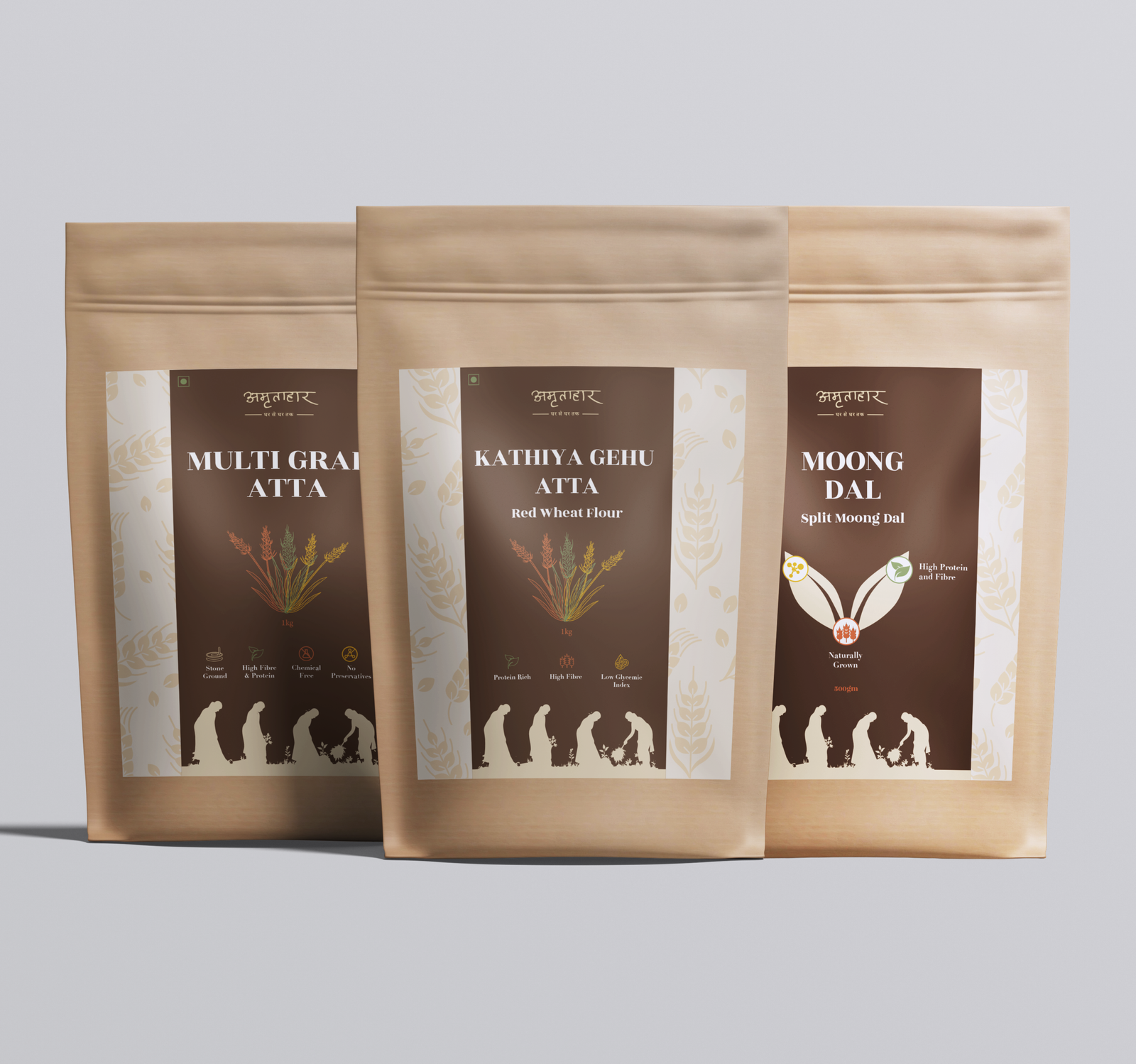
- 1 cup Amratahaar Multigrain Atta
- ¼ cup curd
- ½ small onion, finely chopped
- 2 tablespoons grated carrot
- 2 tablespoons finely chopped methi or coriander
- 1 small green chilli, finely chopped
- ½ teaspoon cumin seeds
- A pinch of turmeric
- Salt to taste
- Water, as needed
- ¼ teaspoon baking soda or fruit salt
- Ghee or oil for cooking
How to make it:
- Add multigrain atta, curd, onion, carrot, greens, green chilli, cumin, turmeric and salt to a mixing bowl.
- Add water gradually to make a thick, spoonable batter. Let it rest for 10–15 minutes.
- Check the consistency and add a little water if the batter has thickened too much.
- Add baking soda or fruit salt just before cooking and mix gently.
- Heat an appe pan and grease each cavity with a little ghee or oil.
- Pour the batter into the cavities, cover and cook on low to medium heat.
- Once the underside turns golden and the edges begin to set, flip the appe and cook the other side.
- Serve warm with green chutney or Amratahaar pickle.
A small tip: Multigrain flour absorbs water differently from regular wheat flour, so let the batter rest before adjusting its consistency. Avoid making it too runny.
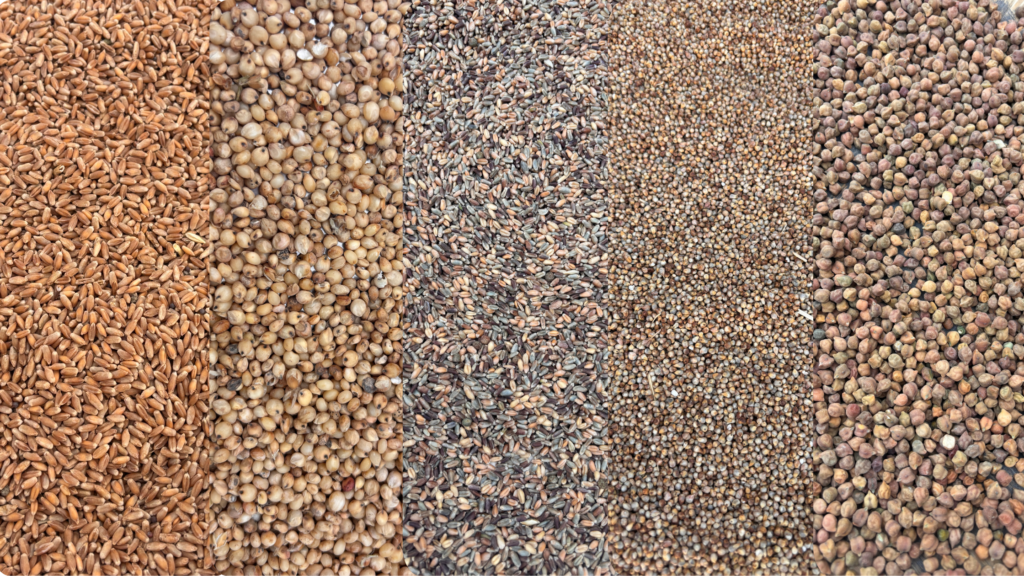
Amratahaar’s Multigrain Atta brings together black wheat, red wheat, bajra, jowar and chana. If you’re curious about why these five grains are combined, you can read more about our five-grain blend here.
5. Makki Dhokla: A Twist on the Familiar Steamed Snack
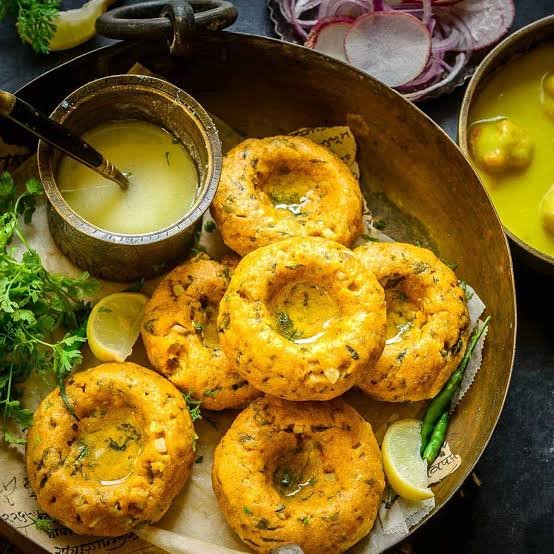
Dhokla is usually made with besan, but cornmeal or makki flour can also be used to make a different version of this steamed snack.
It has a slightly grainy texture and goes well with a simple mustard-seed tempering. If you’re looking for something other than roti or paratha with makki flour, give this a try.
What you’ll need:
- ½ cup makki flour
- ¼ cup besan
- ¼ cup curd
- ½ teaspoon ginger-green chilli paste
- A pinch of turmeric
- Salt to taste
- Water, as needed
- ½ teaspoon fruit salt (Eno), added just before steaming
For the tempering:
- 1 teaspoon oil
- ½ teaspoon mustard seeds
- A few curry leaves
- 1 green chilli, slit
- 1 tablespoon water
- Chopped coriander
How to make it:
- Mix makki flour, besan, curd, ginger-chilli paste, turmeric and salt in a bowl.
- Add water gradually to make a thick but pourable batter. Let it rest for 10–15 minutes.
- Grease a small steaming plate or tin.
- Add the fruit salt to the batter, sprinkle a little water over it and mix gently.
- Pour immediately into the prepared plate and steam for around 15–20 minutes, or until a toothpick inserted in the centre comes out clean.
- Let it cool slightly before cutting into squares.
- For the tempering, heat oil, add mustard seeds, curry leaves and green chilli. Add a tablespoon of water and pour over the dhokla.
- Finish with chopped coriander.
Serve with green chutney.
A small tip: Makki flour behaves differently from besan, so don’t expect the exact same texture as regular dhokla. Check that the centre is fully cooked before taking it out.
6. Bajra Methi Muthiya: A Steamed Snack with a Tadka
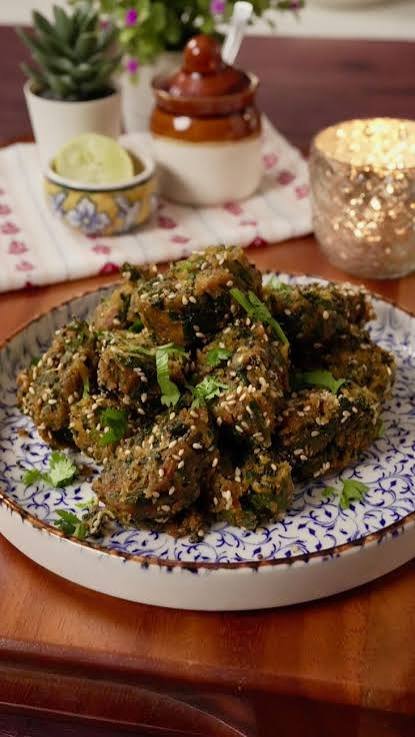
Muthiya is a popular Gujarati preparation made by shaping a spiced dough into small rolls. These are steamed and then sometimes pan-fried with a simple tempering.
Adding bajra flour and fresh methi gives the muthiya a lovely winter flavour. It’s also a good way to use the bunch of methi sitting in your fridge.
What you’ll need:
- ½ cup bajra flour
- ¼ cup besan
- 1 cup finely chopped fresh methi
- 1 tablespoon curd
- 1 teaspoon ginger-green chilli paste
- ½ teaspoon sesame seeds
- ¼ teaspoon turmeric
- ½ teaspoon cumin powder
- Salt to taste
- 1–2 teaspoons oil
- Water, only if needed
For the tempering:
- 1 teaspoon oil
- ½ teaspoon mustard seeds
- ½ teaspoon sesame seeds
- A few curry leaves
How to make it:
- Wash and finely chop the methi. Squeeze out excess water if it is very wet.
- Combine bajra flour, besan, methi, curd, ginger-chilli paste, sesame seeds, turmeric, cumin powder, salt and oil.
- Mix into a firm, slightly soft dough. Add a little water only if needed.
- Shape the dough into small cylindrical rolls.
- Place them in a greased steamer and steam for 15–20 minutes, or until cooked through.
- Let them cool slightly, then cut into bite-sized pieces.
- Heat oil in a pan. Add mustard seeds, sesame seeds and curry leaves.
- Add the muthiya pieces and toss gently until lightly crisp on the outside.
Serve with green chutney or a cup of tea.
A small tip: Methi releases moisture as it sits. Mix the dough just before steaming, and avoid adding too much water.
7. Sattu, Gond & Dry Fruit Laddoos
Winter and homemade laddoos go together beautifully. And if you’ve only used sattu to make sharbat or parathas, here’s another way to bring it into your kitchen.
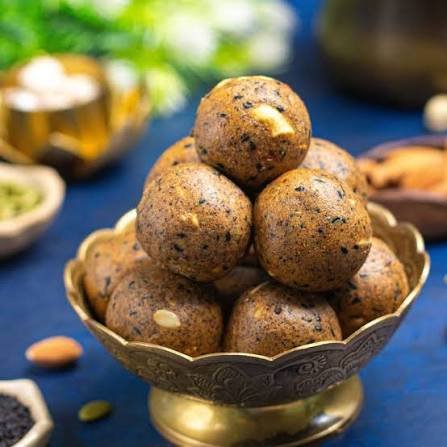
These laddoos combine roasted chana sattu with edible gond, nuts, jaggery and ghee. They’re easy to prepare in a regular kitchen and make a lovely homemade winter sweet.
What you’ll need:
- 1 cup Amratahaar Chana Sattu
- ¼ cup edible gond
- ½ cup ghee (adjust as needed)
- ½ cup powdered jaggery (adjust to taste)
- ¼ cup chopped almonds and cashews
- 2 tablespoons chopped raisins
- ½ teaspoon cardamom powder
How to make it:
- Heat a little ghee in a pan. Fry the edible gond in small batches until it puffs up. Remove, cool and crush it coarsely.
- In the same pan, lightly roast the chopped nuts and raisins. Keep aside.
- Add more ghee and roast the Chana Sattu on low heat for 3–4 minutes, stirring continuously. Avoid roasting it for too long, as sattu is already made from roasted chana.
- Turn off the heat and let the mixture cool until warm.
- Add the crushed gond, nuts, raisins and cardamom powder.
- Mix in the powdered jaggery.
- Add a little warm melted ghee if the mixture feels too dry to bind.
- While still warm, shape into small laddoos.
A small tip: Add jaggery only after the sattu mixture has cooled slightly. If the mixture becomes too crumbly while shaping, add a little more melted ghee.
Sattu is often used in drinks and savoury dishes, but it can also be used in homemade sweets. If you’d like to explore more ways to use it, here’s our guide to Chana Sattu and its different uses.
Bring More Grains Into Your Everyday Kitchen
ou don’t need a completely new menu to try something different. Sometimes, all it takes is using a familiar ingredient in a new way.
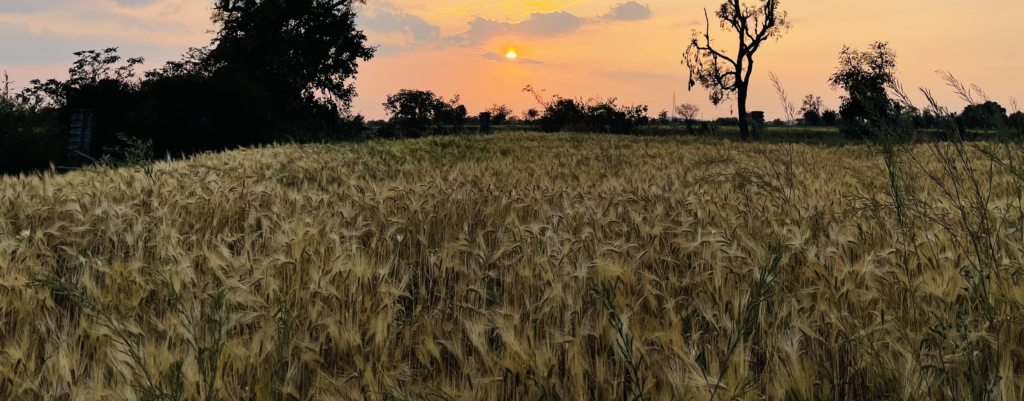
At Amratahaar, we bring grains from our farms in Bundelkhand to your kitchen, freshly milled and packed with care by our women-led team.
Whether you’re looking for everyday wheat flour, a five-grain multigrain blend or other wholesome staples, there’s something to explore.
Explore Amratahaar’s range of farm-grown staples.