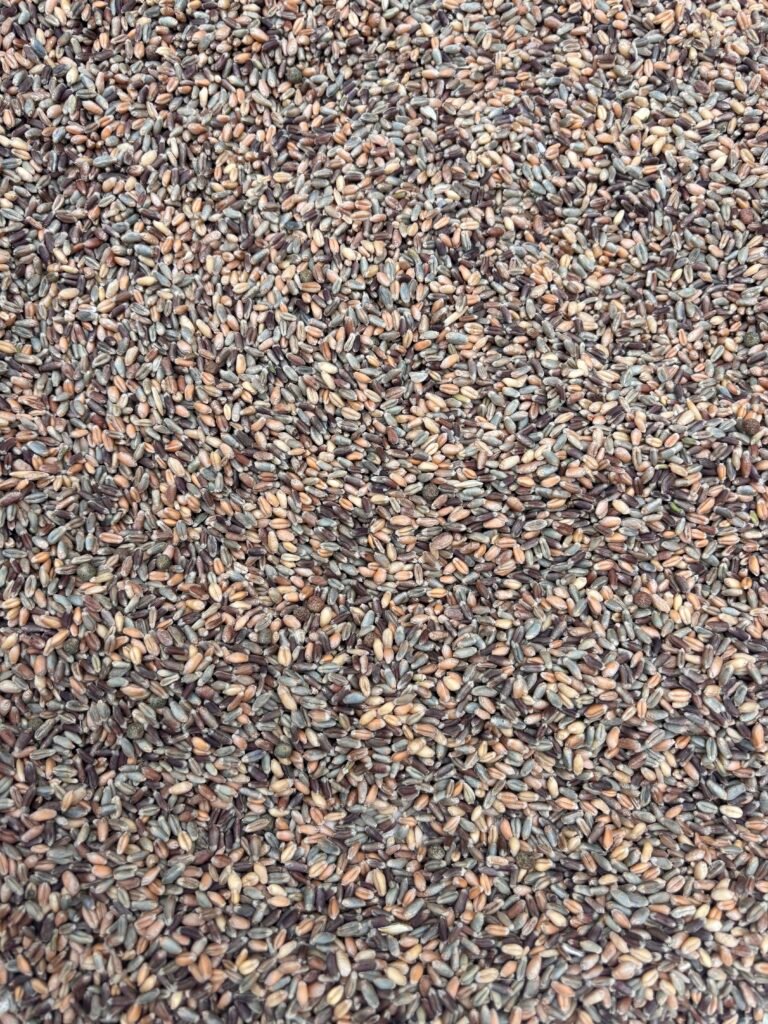
Black wheat looks very different from the wheat most of us know.
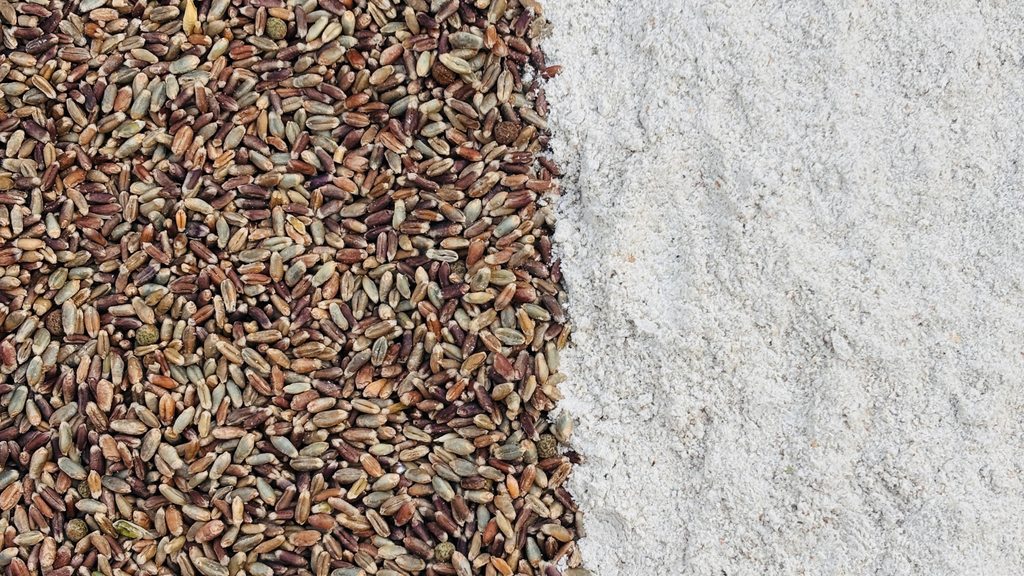
While regular wheat has the familiar golden-brown colour, black wheat has a deep purple to black appearance. But is the difference only in the colour? Or does black wheat actually offer something different nutritionally?
That is what makes the comparison interesting.
Both black wheat and regular wheat can be used to make everyday atta, rotis and chapattis. But black wheat contains naturally occurring pigments called anthocyanins, which give the grain its distinctive colour and contribute to its antioxidant activity. Research comparing pigmented and conventional wheat has consistently found much higher anthocyanin levels in black wheat.
So, how different are they when it comes to nutrition, fibre, protein, antioxidants, taste and everyday use?
Let’s compare them.
Difference between Black Wheat Flour and Regular White Wheat Flour
| Black Wheat Flour | Regular Wheat Flour | |
| Grain color | Purple-black to dark black | Golden to light brown |
| Anthocyanins | Naturally rich in anthocyanins | Present in much lower amounts |
| Antioxidant compounds | Higher levels of antioxidants and phenolic compounds in many varieties | Contains naturally occurring phenolic compounds |
| Fibre | A good source of dietary fibre; amount varies by variety and milling | Lower in regular wheat flour, varies with how the flour is made |
| Protein | Rich in plant based protein | Lower in regular wheat flour, varies with how the flour is made |
| Gluten | Naturally contains less gluten | Contains more gluten in comparison |
| Roti making | Can be used for everyday rotis and chapattis | Commonly used for everyday rotis and chapattis |
| Appearance after cooking | Naturally darker | Familiar golden-brown colour |
The important thing to remember is that “black wheat” does not automatically mean every black wheat flour has the same nutrition. Wheat variety, growing conditions and milling can all affect the final flour.
That is why it is useful to look at both the type of wheat and the actual nutrition information of the flour you are buying.
Which has more nutritional benefits – Black Wheat or Regular Wheat?
This is where black wheat has something interesting to offer.
Both black wheat and regular whole wheat provide nutrients such as carbohydrates, protein and fibre.
But black wheat is naturally rich in antioxidants, particularly the compounds that give it its dark colour.
Okay, but what are antioxidants?
Think of your body as constantly working, repairing and producing energy. During these everyday processes, unstable molecules called free radicals are produced.
Too many free radicals can damage cells over time.
Antioxidants help protect your cells from this damage by neutralising these unstable molecules.
That’s why antioxidants are considered an important part of a healthy diet.
And you don’t need to get them from supplements.
They’re naturally present in many foods — fruits, vegetables, pulses, nuts and some grains.
Black wheat is interesting because it naturally brings another source of these antioxidant compounds into an everyday staple: your atta.
Research comparing black wheat with regular wheat has found much higher levels of anthocyanins and antioxidant activity in black wheat.
So instead of thinking:
“I need to eat more antioxidants.”
Think of it this way:
“If I’m already eating wheat every day, I can choose a variety that naturally contains more of these plant compounds.”
That’s the real nutritional difference.
So, which is more nutritious?
If we’re talking about the most distinctive nutritional difference, black wheat stands out because of its naturally high antioxidant content.
Regular whole wheat is nutritious too. It provides fibre, protein and other nutrients that make it a useful everyday staple.
Black wheat simply gives you a different nutritional profile – with more of these naturally occurring antioxidant compounds.
And that brings us to the bigger question:
Should you switch from Regular Wheat Atta to Black Wheat Atta?
Here’s the honest answer:
It depends on what your body needs.
Regular atta can absolutely be part of a healthy everyday diet, but only if it is whole wheat.
But black wheat can be worth trying if you’re looking for a little more variety in the wheat you eat.
Think about it this way.
You’re not replacing roti with a complicated “health food.”
You’re not changing your entire diet.
You’re simply using a different kind of wheat to make the same everyday roti.
Black wheat is worth trying if you:
- Want to add more variety to your everyday grains.
- Want naturally occurring antioxidant compounds in your diet.
- Are looking for an atta with a better nutritional profile.
- Want to try something beyond the usual wheat atta.
- Still want to make your regular rotis and chapattis.
And if you’re wondering whether the dark colour will make it difficult to use:
It won’t.
Black wheat atta can be kneaded, rolled and cooked just like regular atta. Your roti will simply have a naturally darker colour
What about taste?
The taste can vary depending on the wheat and how the flour is milled, but black wheat doesn’t mean you have to give up your familiar roti.
If you’re trying it for the first time, you can even start by mixing it with your regular atta and see how you like it.
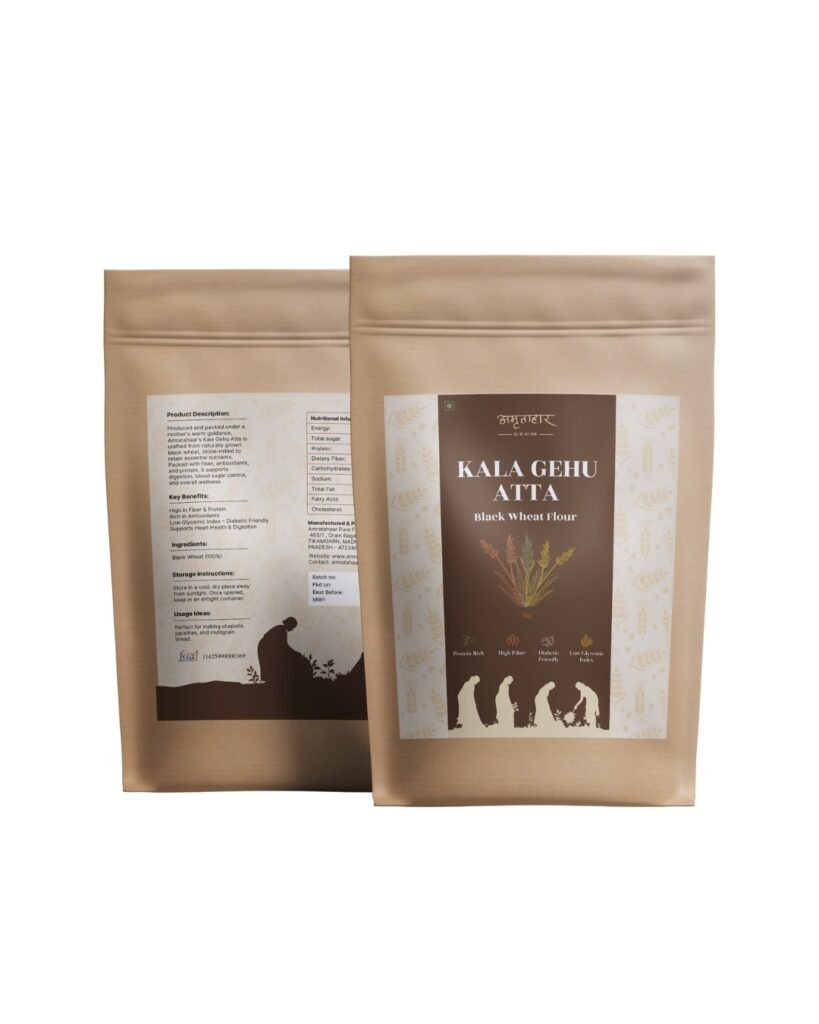
At Amratahaar, our Black Wheat Atta starts with black wheat grown on our farms in Bundelkhand.
We stone-grind it and freshly mill it after orders, rather than keeping flour milled for months.
Same everyday roti. A different kind of wheat.
Explore Amratahaar Black Wheat Atta →
FAQs
Is Kala Gehu Atta different from regular Gehu Atta?
Yes. Kala Gehu is naturally dark because of its higher antioxidant content, while regular wheat is naturally lighter in colour.
Does Black Wheat Atta taste different from regular wheat atta?
Slightly. Black Wheat Atta has a deeper wheat flavour, while regular wheat atta is milder.
Which should I choose: regular wheat atta or Black Wheat Atta?
Regular wheat is a familiar everyday choice. Black Wheat offers a different nutritional profile, especially its naturally higher antioxidant compounds. So, if you want something more from your everyday roti, you can choose black wheat flour.
Is Black Wheat Atta good for weight loss?
Black wheat flour can be a part of a weight management diet, as it is high in fiber so it keeps you full for long.