Have you ever wondered why certain foods seem to find their way into our kitchens at a particular time of the year?
Why do mangoes suddenly become a big part of summer? Why is bajra so closely associated with winter meals? And why do some families spend hours preparing pickles and drying ingredients when certain fruits and vegetables are in season?
These habits aren’t just about taste or tradition. They have a story that begins much earlier, out in the fields.
For generations, farming in India has followed the changing seasons. Rainfall, temperature and soil conditions influence what farmers can grow and when they can harvest it. And what grows in a region eventually finds its way into local markets, kitchens and everyday meals.
The connection between farming and food is closer than we sometimes realise. To understand it, let’s follow the journey of a crop through the year.
It often begins with the first rains
For many farming communities, the arrival of the monsoon is an important time of the year. The first good showers bring relief from the summer heat, but they also signal the beginning of a new agricultural cycle.
Before seeds go into the soil, farmers prepare their fields. The land may need ploughing, levelling and other preparation depending on the soil and the crop. Once conditions are suitable, sowing begins.
This is the beginning of what is broadly known as the Kharif season. Crops such as rice, maize, bajra, jowar, soybean and several pulses are grown during this period, though the choices differ from one region to another.
In Bundelkhand, for example, the farming calendar includes crops such as urad, jowar, bajra and other monsoon-season crops. The choice depends on local conditions, rainfall and the land being cultivated.
But sowing is only the beginning. Once the seeds are in the soil, farmers have months of work ahead of them.
The crop needs to establish itself, grow and mature. Fields need to be monitored, weeds managed and the plants looked after through changing weather conditions. The timing and distribution of rainfall can make a significant difference to how a crop develops.
And while all this is happening in the fields, life in the kitchen continues. Meals are prepared with whatever is available locally, and familiar foods like dal, rice, roti and seasonal vegetables remain part of everyday cooking.
While the crops grow, the kitchen makes the most of what’s available
Summer may be difficult for farmers working outdoors, but it is also a season of abundance for certain fruits and vegetables.
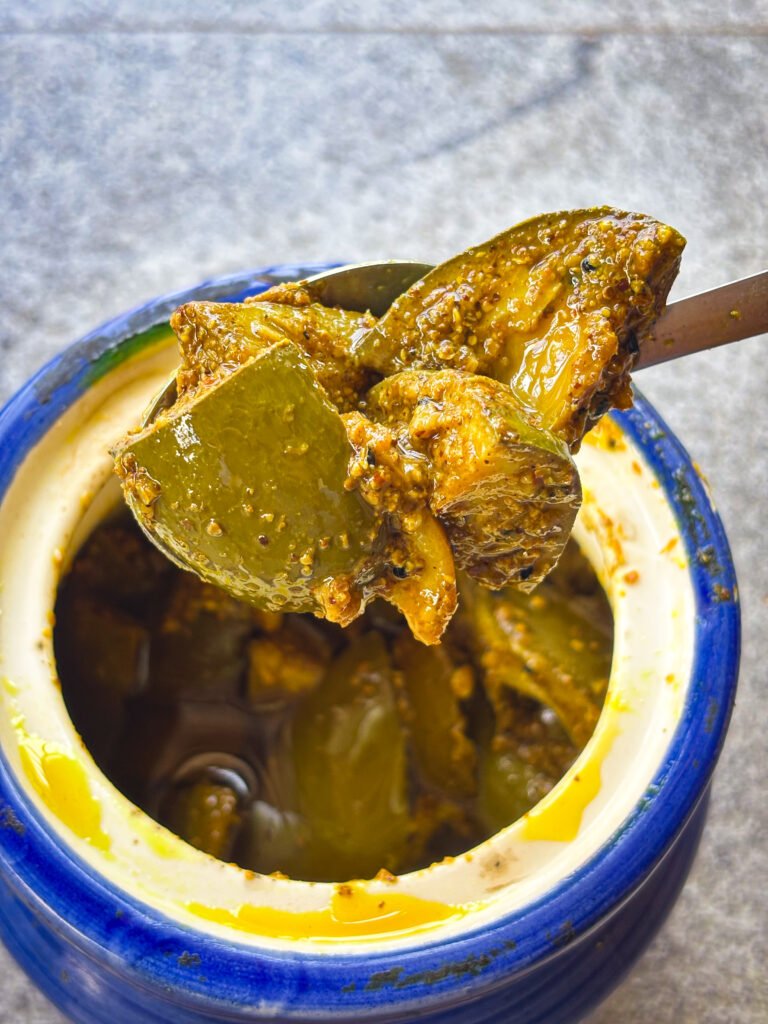
Mangoes arrive in markets, raw mangoes are turned into chutneys and aam panna, and families begin preparing pickles that will last well beyond the summer months.
In many homes, pickle-making is almost an annual routine. The mangoes are cut, mixed with spices and oil, and sometimes left out in the sun as part of the preparation. It takes time, attention and a little patience, but the result is something that can be enjoyed long after mango season has passed.
At Amratahaar, this tradition is close to home. Our pickles follow recipes that have been passed down through generations, with our founder bringing her family’s experience and recipes into the process. From mango to amla and other familiar favourites, these are flavours that have always had a place in Indian kitchens.
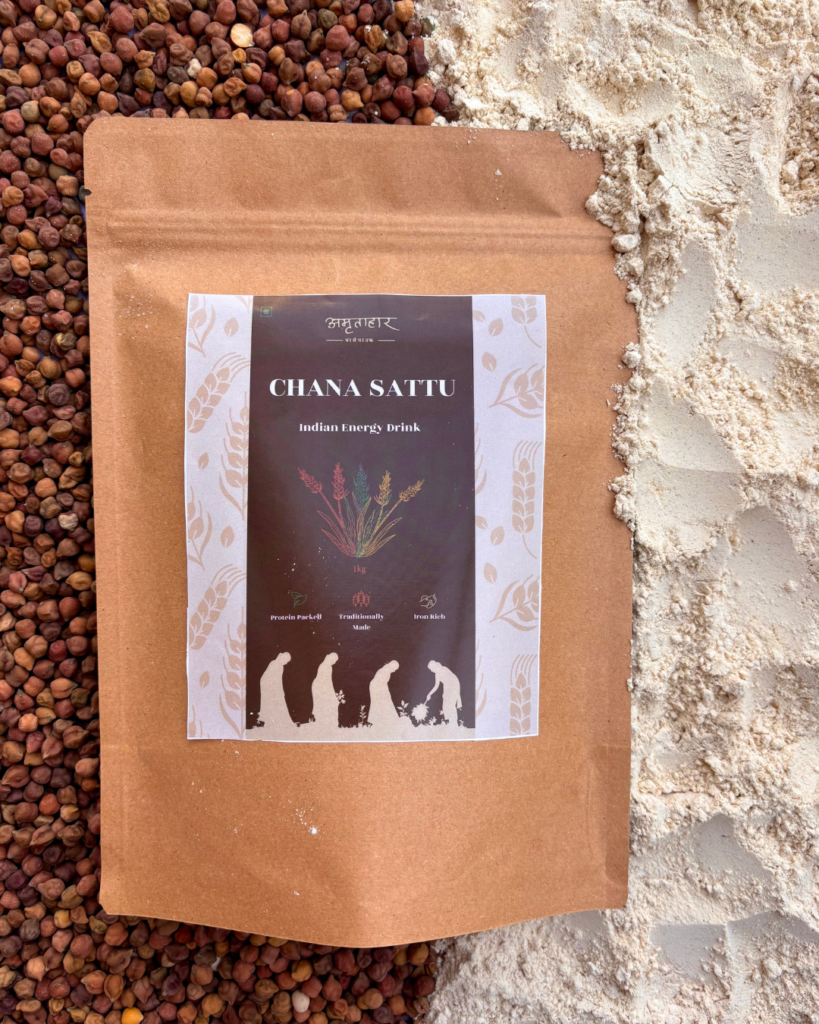
Summer also brings its own everyday foods. A glass of sattu sharbat, for instance, is familiar in many parts of North and eastern India. Made with roasted chana sattu, water, lemon and spices, it is a simple preparation that has been enjoyed for generations.
Chana Sattu is one of those ingredients that can do much more than make a drink. It can be used for stuffed parathas, litti and several sweet and savoury preparations. At Amratahaar, we bring this versatile ingredient to the kitchen in a form that is easy to use.
But summer isn’t only about what’s eaten fresh. It is also a reminder that food has always needed to be managed around its availability. Some ingredients are enjoyed immediately, while others are prepared and stored for another time.
A harvest is more than just bringing the crop in
As the monsoon crops mature, the fields begin to look different. What started as freshly sown seeds months ago is now ready for harvesting, depending on the crop and local growing conditions.
But even after the crop is harvested, the journey isn’t over.
For grains and pulses, harvesting is followed by several important steps. The grain needs to be separated from the stalks and straw, cleaned, dried and prepared for storage or further processing.
These steps may sound simple, but they require care. Grain that is stored before it is sufficiently dry can develop problems during storage. Cleaning and sorting also help remove unwanted material before the grain is put away or processed.
In many farming households, these tasks have traditionally involved considerable manual work. Women have played an important role in cleaning, sorting and preparing grains, often using familiar household tools and techniques passed down over generations.
At Amratahaar, this part of the journey matters to us. Our women farmers are at the heart of the process. After harvesting, grains are picked out from the straw, cleaned using a suppa, washed by hand and dried before they are ready for milling.
It is easy to think of flour as something that simply comes in a packet. But there is a whole journey behind it, and every step contributes to bringing the grain from the farm to the kitchen.
When the weather turns cooler, another growing season begins
While the monsoon harvest is being brought in, another part of the agricultural year is approaching. As the rains recede and temperatures begin to drop, farmers in many regions prepare for the Rabi season. Unlike Kharif crops, which are generally sown with the monsoon, Rabi crops are grown during the cooler months.
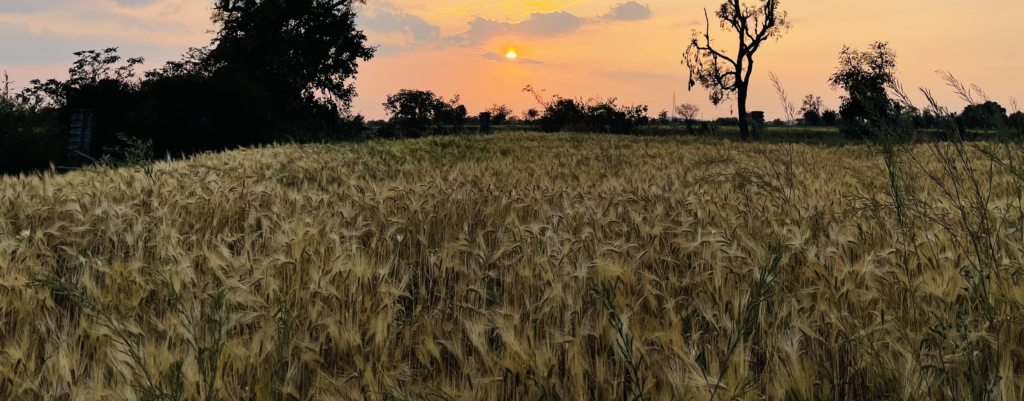
Wheat, gram, mustard, lentils and peas are among the crops commonly grown during this season. Fields are prepared, seeds are sown and the crops grow through the winter months. The harvest generally comes in spring, when the grain is ready to be brought in.
This is particularly important for wheat. The wheat we use for everyday rotis doesn’t grow overnight or arrive in our kitchens straight from the field. It has been sown, cared for and harvested over several months before it becomes grain ready for processing. And this is also where the connection between farming and winter food traditions becomes interesting.
Think of the bajra roti enjoyed in many parts of India. Bajra is commonly grown as a Kharif crop, but it is often eaten during winter. The grain is harvested, stored and then used in meals during the cooler months. So the season in which a crop is grown isn’t necessarily the season in which we eat it. Storage, local food habits and regional preferences all influence when it eventually reaches the plate.
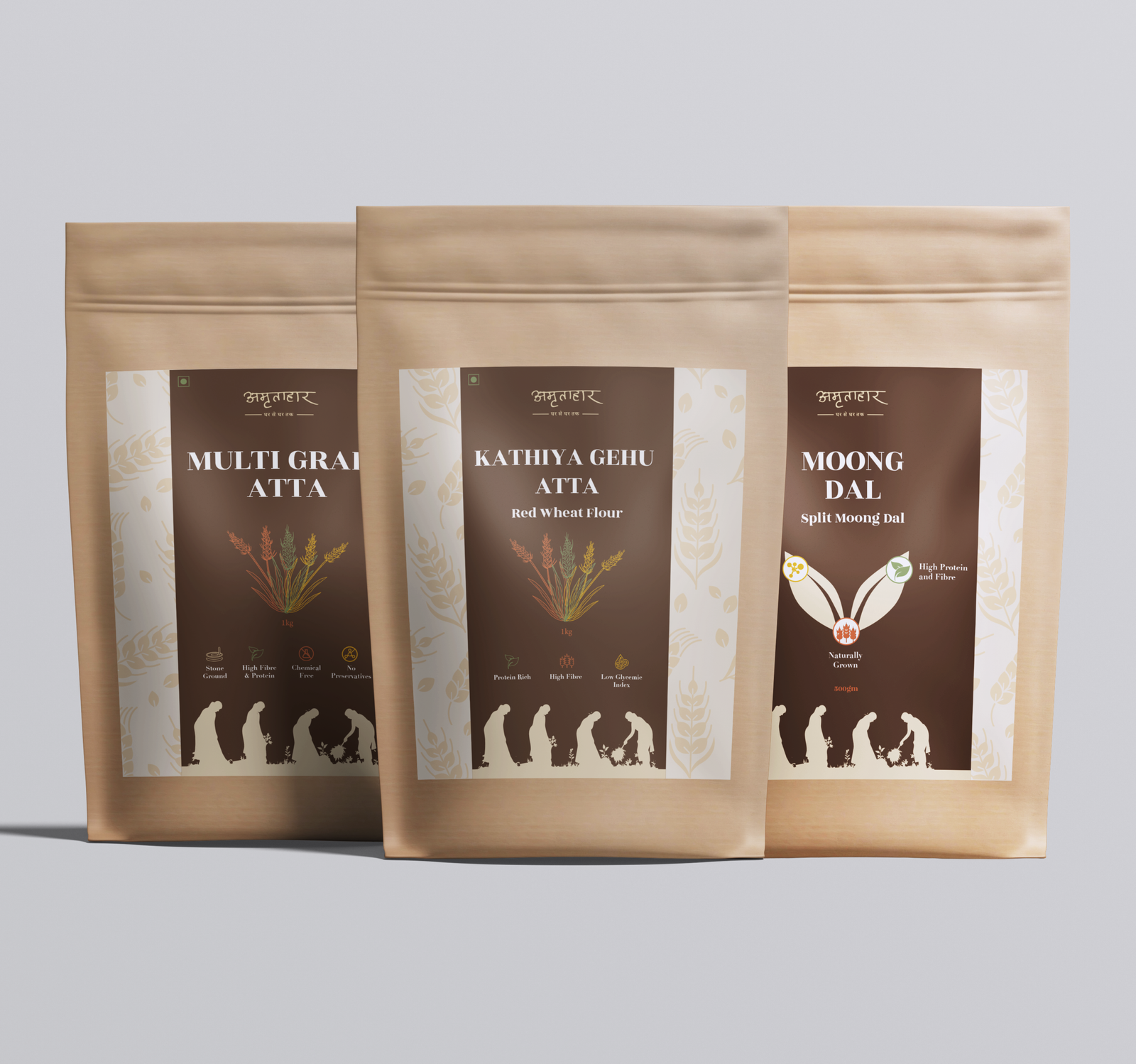
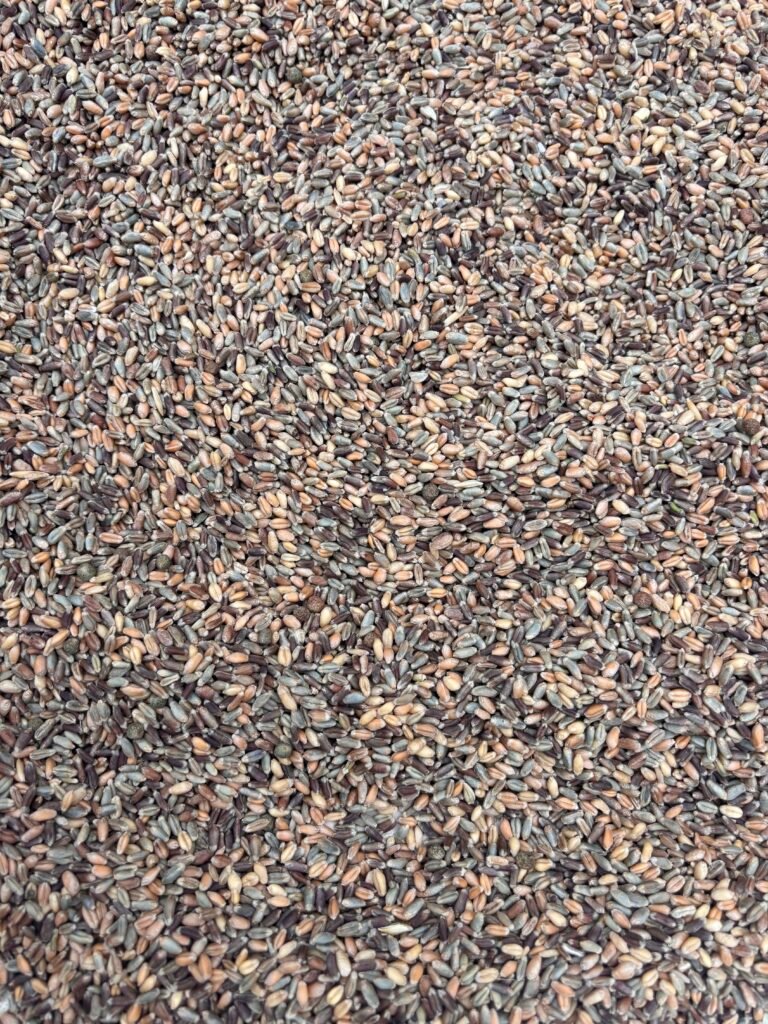
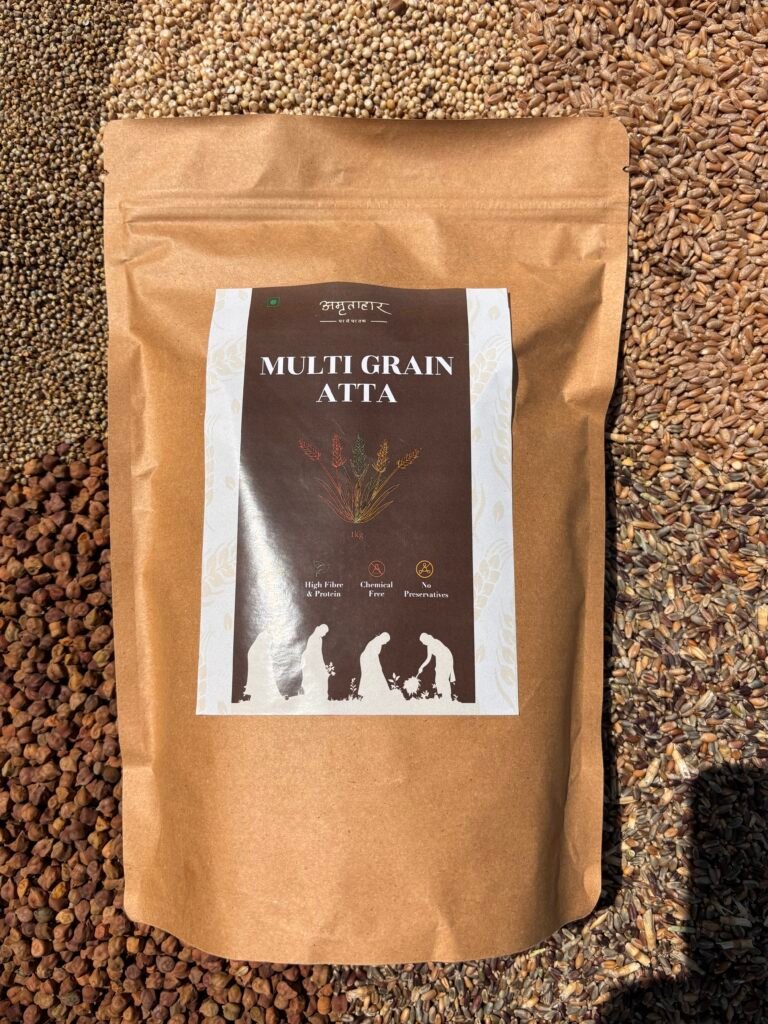
At Amratahaar, bajra is one of the five grains in our Multigrain Atta, alongside red wheat, black wheat, jowar and chana. It’s one way of bringing different grains together in a familiar everyday food — the roti.
The agricultural year continues, and so does the food on our plates
The agricultural year doesn’t follow one identical pattern across India. Rainfall, irrigation, soil and local conditions all influence what farmers grow and when they harvest it.
But the larger connection remains: the food we eat is shaped by the land, the weather and the work that goes into growing it.
A bowl of dal, a freshly made roti, a jar of homemade pickle or a glass of sattu may seem like ordinary parts of everyday cooking. Yet each has a story behind it — a crop that was grown, a harvest that was handled, an ingredient that was stored or prepared, and people who made it possible.
At Amratahaar, that connection is at the heart of what we do. Our farms are in Bundelkhand, and women farmers are at the center of bringing these grains and staples from the fields to modern kitchens.
We often think about food in terms of recipes and ingredients. But perhaps it’s worth looking a little further back, too.
Because before food reaches our plates, it has already travelled through a season, a field and many hands.
Explore Amratahaar’s range of farm-grown staples.