“How do you get enough protein without eating meat?”
It’s a question most Indian vegetarians have heard at some point — usually from someone assuming a plant-based plate can’t keep up. But the truth is simpler: dal, besan, sattu, and whole grains have been doing this job in Indian kitchens for generations. The gap isn’t in the food. It’s that most of us have never actually looked at the numbers.
This guide breaks down how much protein you really need, which everyday Indian foods deliver the most, and how to build a genuinely high-protein day without supplements or imported “protein foods.”
How Much Protein Do You Actually Need?
Protein requirements vary by body weight, activity level, and age, but a commonly used general benchmark is roughly 0.8g of protein per kg of body weight per day for a sedentary adult — so a 60kg adult would need around 48g daily, more if active or strength training. Most Indian vegetarian diets, built around dal, atta, and vegetables, can meet this comfortably with a bit of intention — the issue is usually distribution across the day, not total availability
High-Protein Vegetarian Foods: The Complete List
| Food | Protein |
| Paneer | ~18g |
| Chana Sattu | 21.25g |
| Soya chunks (dry) | ~52g |
| Moong / Urad / Masoor Dal | ~24-25g |
| Besan (gram flour) | 14.40g |
| Rajma / Chana (cooked) | ~8-9g |
| Multigrain Atta | 8.66g |
| Black Wheat Atta | 8.7g |
| Red Wheat Atta | 8.15g |
| Peanuts | ~25g |
| Roasted Chana | ~20g |
Dry/raw weights unless noted — cooked dal and legumes will show lower per-100g values due to water absorption during cooking.
Notice the pattern: the most protein dense foods on this list are also the most traditional ones. Sattu, besan, and dal haven’t needed a rebrand as “superfoods” — they’ve just been under-marketed compared to imported alternatives.
Paneer — The Classic, Still a Strong Choice
At roughly 18g of protein per 100g, paneer remains one of the most accessible high-protein foods in Indian vegetarian cooking — it’s just not the only one. Pairing it with plant-based sources like dal and sattu across the week, rather than relying on it alone, builds a more varied and sustainable protein intake.
Chana Sattu — The Original Protein Drink
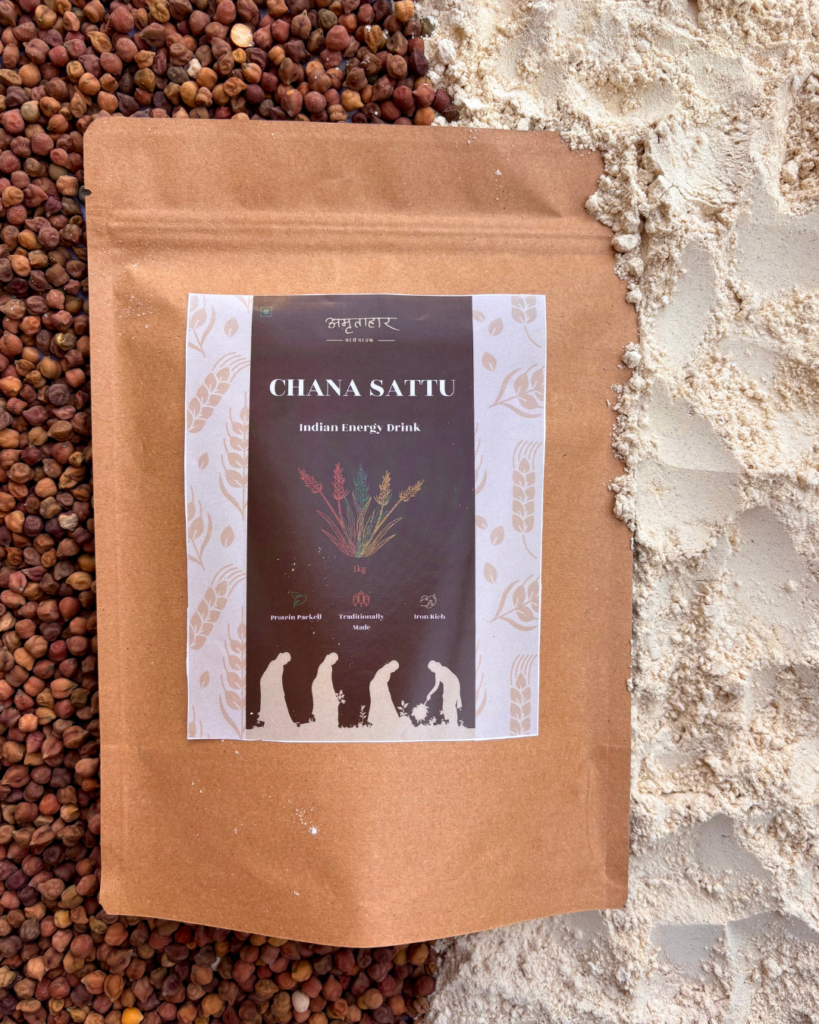
At 21.25g protein per 100g, sattu rivals many commercial protein powders — without the added sugars or artificial ingredients. A glass of sattu with water, lemon, and a pinch of salt or jaggery has been a traditional protein source in Uttar Pradesh for generations, long before “protein shake” entered the vocabulary. Read more about chana sattu.
Besan — Protein Hiding in Plain Sight
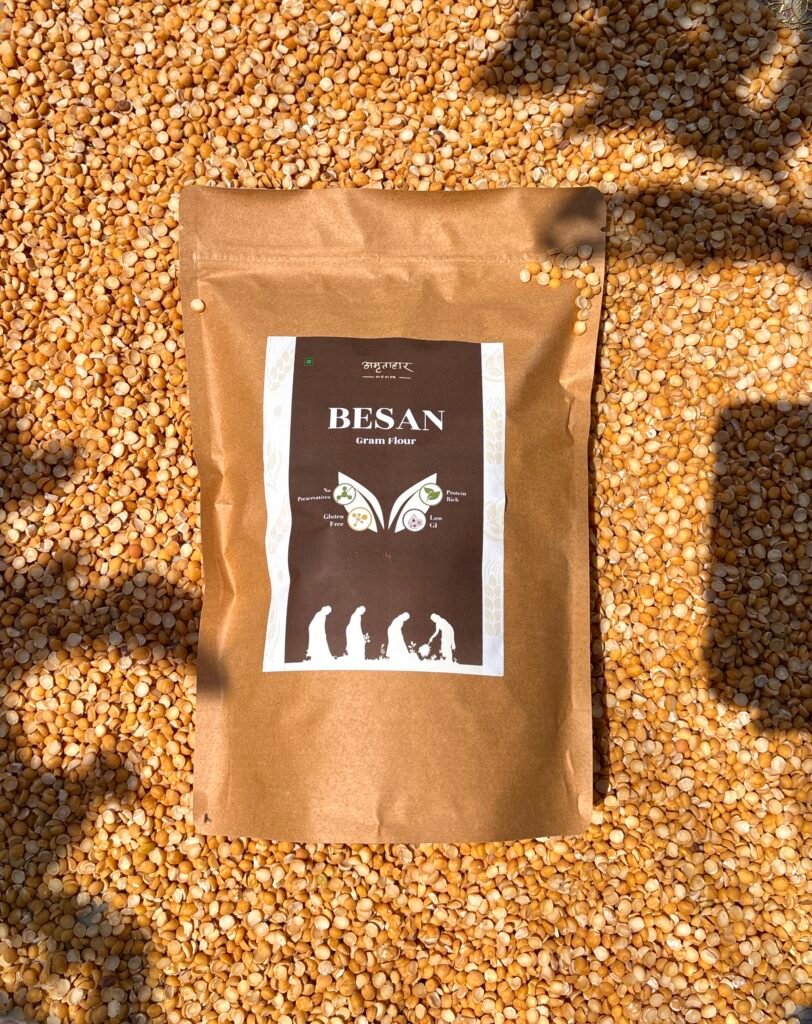
Besan delivers 14.40g of protein per 100g and it’s already a kitchen staple for chilla, pakoras, and dhokla.
Swapping a plain-flour snack for a besan-based one is an easy, no-effort way to add protein to a meal you were already planning to eat and making it rich in protein.
Dal — The Everyday Backbone
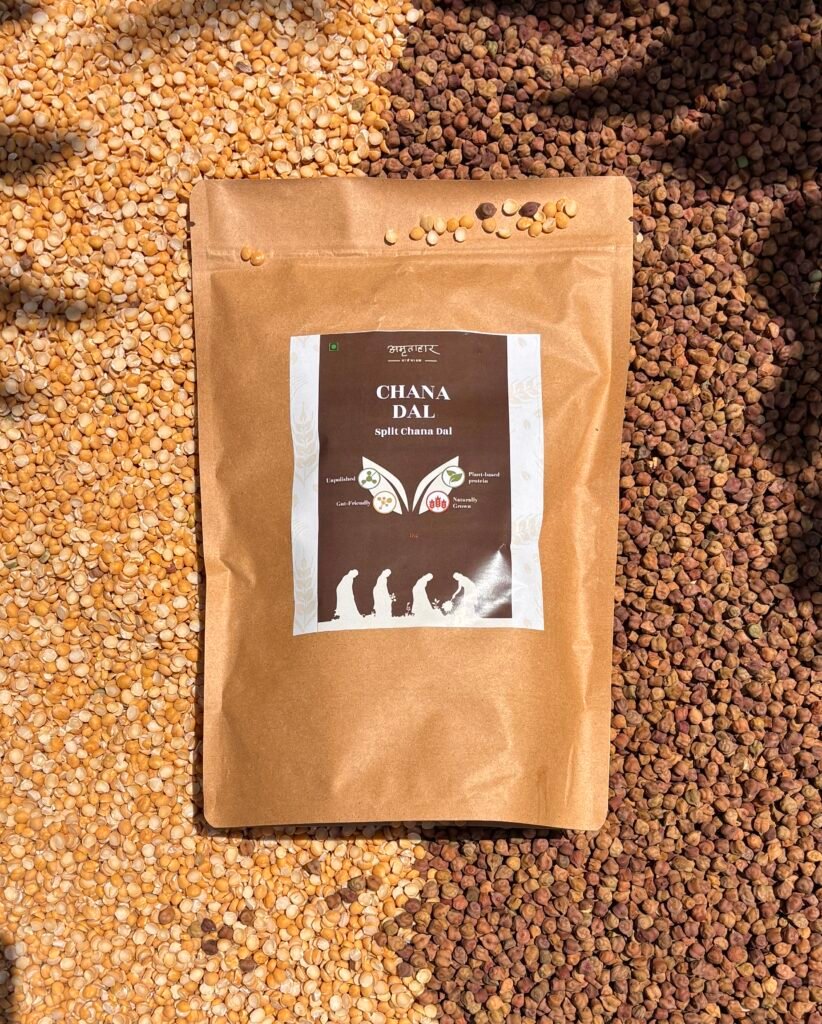
Chana, moong, urad, and masoor dal are commonly cited in the 24-25g protein range per 100g dry weight — making a simple bowl of dal one of the most protein-efficient foods in an Indian kitchen, long before considering any other source. Learn why unpolished dal retains more of this nutrition.
Whole Wheat — A Smaller, Steady Contribution
Atta won’t be your primary protein source, but it adds up: Multigrain (8.66g), Black Wheat (8.7g), and Red Wheat (8.15g) atta all contribute meaningfully across a day of rotis, especially since you’re eating it at nearly every meal anyway.
Building a High-Protein Vegetarian Day
- Breakfast: A glass of chana sattu or a besan chilla
- Lunch: 2 rotis + a bowl of dal + sabzi
- Evening: Roasted chana or peanuts
- Dinner: Rajma or chana curry with roti
If your current diet is relatively low in Fiber, don’t try to jump straight to 30 grams overnight.
Add it up, and a fairly ordinary Indian vegetarian day — nothing exotic, nothing imported — comfortably clears 40-50g of protein.
It Was Never About Meat vs. No Meat
The “vegetarians don’t get enough protein” idea usually comes from comparing isolated foods — a boneless chicken breast against a plain salad — rather than comparing actual full meals. A thali built around dal, besan, and whole grains was never short on protein. It just needed the numbers to catch up with what Indian kitchens already knew.
At Amratahaar, our Chana Sattu, Besan and our whole wheat flours are made the traditional way — stone-ground, chemical-free, from grain grown on our own Bundelkhand farms. No shortcuts, no imported protein powders required.
FAQs
How much protein do I need each day?
A common benchmark for healthy adults is around 0.8 g of protein per kg of body weight per day. Your needs can be higher depending on your age, activity level and goals.
Is besan a good source of protein?
Yes. Besan is a convenient plant-based source of protein and can easily be included in meals like chilla, cheela, kadhi and besan roti.
Is sattu a good source of protein?
Yes. Chana sattu provides plant-based protein and is an easy way to add protein to your everyday diet.
Which Indian dals are good sources of protein?
Dals such as moong, masoor, urad and chana dal can contribute significant amounts of plant-based protein. The exact amount depends on the dal and whether you’re measuring it dry or cooked.
Can vegetarians get enough protein without meat or eggs?
Yes. A well-planned vegetarian diet can provide enough protein through dals, legumes, dairy, soy, nuts, seeds and other plant-based foods.