A jar of homemade achar can last for a long time when it is prepared and stored properly. In fact, a well-made achar often develops a deeper, more balanced flavour as it matures. But sometimes, you open the jar and notice something unusual. Perhaps there’s a layer of mould, an unpleasant smell, or the pickle doesn’t look or smell the way it used to.
So, why does homemade achar spoil?
It usually comes down to a few things: moisture entering the jar, improper handling, unsuitable storage conditions or mistakes during preparation.
Whether you enjoy mango achar, amla achar, lemon chilli pickle or ginger garlic achar, a few simple precautions can help maintain its quality and flavour.
Let’s understand what can cause homemade achar to spoil and how you can take better care of it.
1. Water Gets Into the Achar
One of the most common things to watch out for when storing homemade achar is moisture.
Traditional Indian pickles often involve a careful balance of ingredients, including salt, spices and oil. When unwanted water enters the jar, it can disturb that balance and create conditions in which spoilage microorganisms may grow.
This can happen more easily than you think.
For example:
- Allowing water droplets to collect inside the storage jar.
- Using a wet spoon to take out pickle.
- Putting a spoon back into the jar after it has touched water or other food.
- Not drying fresh ingredients properly before preparing the achar.
How to prevent it:
Always use a clean, completely dry spoon when taking out achar. Make sure your hands and utensils are dry, too.
If you’re preparing achar at home, follow the recipe’s instructions for washing and drying the ingredients. Some recipes require ingredients to be thoroughly sun-dried before they are mixed with spices and oil.
A little care while handling the jar can make a difference.
2. The Lid Is Left Open for Too Long
We’ve all done this at some point. You take out some achar during a meal and forget to close the jar immediately.
But leaving the jar open for extended periods exposes the pickle to dust, insects, moisture and other contaminants.
Repeatedly opening the jar and leaving it uncovered can also affect the quality of the achar over time.
How to prevent it:
- Take out the quantity you need and close the lid immediately.
- Make sure the lid fits properly.
- Avoid leaving the jar open while serving food or preparing a meal.
- Don’t keep the jar near a sink, stove or other places where water and steam are common.
It’s a small habit, but one worth following every time you use your achar.
3. The Storage Jar or Spoon Isn’t Clean and Dry
The jar you use to store achar matters just as much as the ingredients that go into it.
A container with leftover food particles, moisture or an improperly fitting lid can introduce contaminants into the pickle.
The same applies to spoons. A spoon that has been used for another dish and then put back into the achar jar can introduce food particles and moisture.
How to prevent it:
- Use a clean, food-safe glass or ceramic jar suitable for storing the pickle.
- Make sure the jar is completely dry before filling it.
- Check that the lid closes properly.
- Always use a separate, clean and dry spoon to take out achar.
- Avoid transferring leftover pickle from your plate back into the storage jar.
If you’re preparing a fresh batch, don’t rush the drying process. Make sure the container is completely dry before adding the ingredients.
4. The Ingredients and Their Proportions Matter
Achar isn’t made by simply mixing fruits or vegetables with spices and oil. The proportions of the ingredients and the preparation method are important.
Salt, acidity and oil all play different roles in traditional pickle-making. The amount required depends on the type of pickle and the recipe being followed.
For example, mango achar and lemon chilli achar don’t have exactly the same ingredients or preparation requirements.
Changing the proportions without understanding the recipe can affect the final pickle’s flavour, texture and keeping quality.
The quality of the ingredients matters, too. Spoiled produce, damaged garlic or contaminated spices can affect the entire batch.
How to prevent it:
- Start with fresh, good-quality fruits or vegetables.
- Use clean, good-quality spices.
- Follow a reliable recipe and measure the ingredients as instructed.
- Don’t randomly reduce the salt or acidity or change the amount of oil.
- Avoid using ingredients that already show signs of spoilage.
If you’re curious about the role of oil in traditional Indian pickles, read our article on why achar has so much oil and what it actually does.
Oil contributes to flavour and helps coat the ingredients, but remember that a layer of oil alone does not guarantee that a pickle is safe from spoilage.
5. Achar Is Not Stored Properly
Where you keep your achar is another important consideration.
A jar kept near a hot stove, exposed to direct sunlight or placed in a damp area may not maintain its quality as well as one stored appropriately.
Frequent temperature changes and exposure to moisture can also affect the pickle.
How to prevent it:
- Keep the jar in a cool, dry place away from direct sunlight and heat.
- Avoid storing it next to the stove or where steam regularly reaches it.
- Close the lid properly after every use.
- Follow the storage instructions provided with the pickle.
The storage requirements can vary depending on the ingredients and preparation method. Some pickles are designed to be stored at room temperature, while others require refrigeration, particularly after opening. Always follow the recipe or manufacturer’s storage instructions rather than assuming every achar can be stored in the same way.
How Do You Know If Your Achar Has Spoiled?
Sometimes, spoilage is visible. Other times, you may notice a change in the smell or texture.
Here are a few warning signs to look out for:
1. Visible mould: Fuzzy growth or unusual mould patches on the surface or around the jar.
2. Unpleasant smell: A strong, foul or unusual smell that is different from the pickle’s normal aroma.
3. Slimy texture: Ingredients that have become unusually slippery or slimy.
4. Unexpected changes: Unusual bubbling, gas formation, a swollen container or other changes that are not expected for that particular recipe.
A change in colour or flavour alone doesn’t always mean a pickle has spoiled, as some ingredients naturally change as the achar matures. However, if you notice mould, an unpleasant smell or a slimy texture, don’t taste the pickle to check whether it is safe.
When in doubt, discard it. Do not simply remove the visible mould and eat the remaining achar.
A Little About How We Make Achar at Amratahaar
At Amratahaar, achar is something that has been part of our family’s kitchen for years.
Our founder, Kiran, prepares every batch herself, using fresh ingredients, homemade cold pressed mustard oil and a masala recipe that has been part of the family for over 30 years.
The ingredients are carefully prepared, and the achar is made in small batches rather than being produced months in advance.
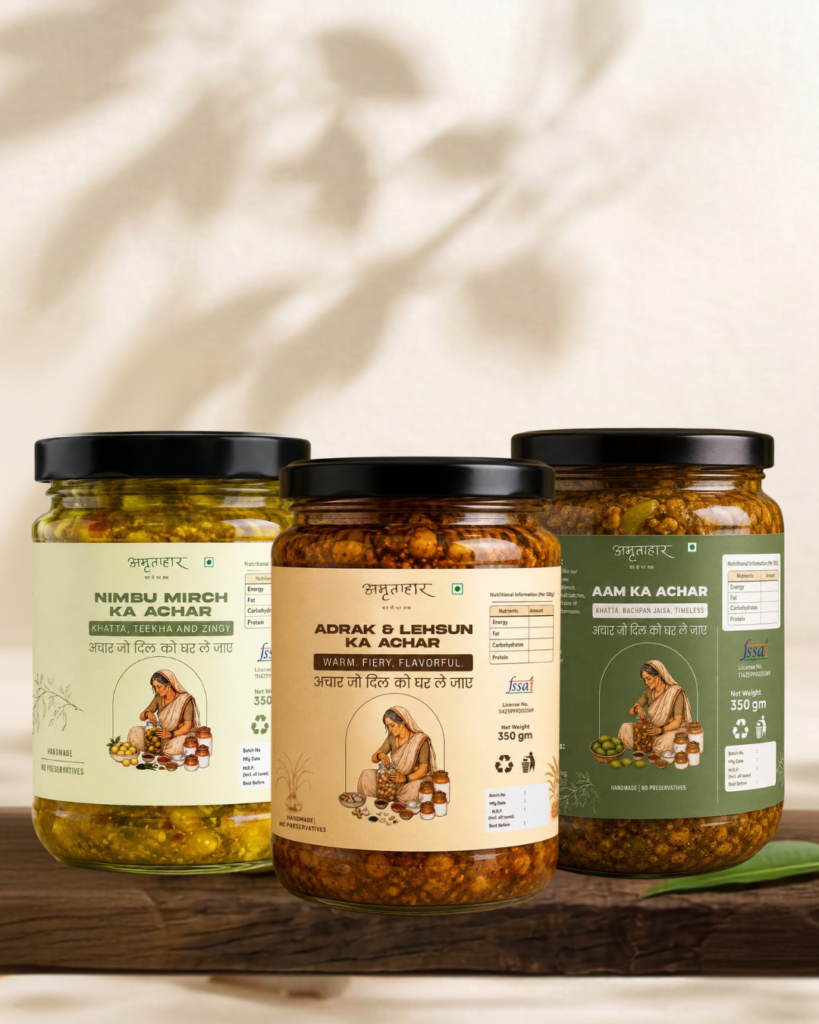
We currently make different varieties, including Aam ka Achar, Amla Achar, Nimbu Mirch Achar and Adrak Lehsun Achar.
Each has its own flavour, but they share the same care that goes into preparing homemade achar.
Because sometimes, the little things that go into making food matter just as much as the ingredients themselves.
Explore Amratahaar’s homemade Achar.
FAQs
1. Why does achar get fungus?
Achar can develop fungus when moisture enters the jar, wet utensils are used, or it isn’t prepared and stored properly.
2. How to preserve achar for a long time?
Use a clean, completely dry spoon every time. Keep the lid tightly closed and store the jar in a cool, dry place, following the storage instructions for that particular achar.
3. How long does achar last?
It depends on the ingredients, preparation method and storage conditions. Always check the best-before date and follow the storage instructions provided.
4. Does oil prevent achar from spoiling?
Oil helps coat the ingredients and contributes to preservation, but it cannot prevent spoilage on its own. Proper preparation, the right ingredient proportions and dry storage are equally important.